List of prime ministers of the United Kingdom

.jpg)
.jpg)
The prime minister of the United Kingdom is the principal minister of the crown of His Majesty's Government, and the head of the British Cabinet.
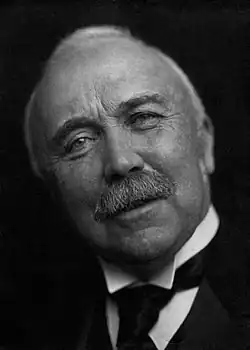
There is no specific date for when the office of prime minister first appeared, as the role was not created but rather evolved over time through a merger of duties.[1] The term was regularly, if informally, used by Robert Walpole by the 1730s.[2] It was used in the House of Commons as early as 1805,[3] and it was certainly in parliamentary use by the 1880s,[4] although did not become the official title until 1905, when Henry Campbell-Bannerman was prime minister.
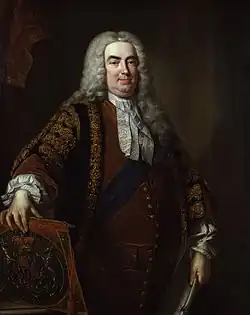
Historians generally consider Robert Walpole, who led the government of the Kingdom of Great Britain for over twenty years from 1721,[5] to be the first prime minister. Walpole is also the longest-serving British prime minister by this definition.[6] The first prime minister of the United Kingdom of Great Britain and Ireland was William Pitt the Younger at its creation on 1 January 1801.[7] The first to use the title in an official act was Benjamin Disraeli who signed the 1878 Treaty of Berlin as "Prime Minister of Her Britannic Majesty".[8]
In 1905, the post of prime minister was officially given recognition in the order of precedence,[9] with the incumbent Henry Campbell-Bannerman the first officially referred to as "prime minister". The first prime minister of the current United Kingdom of Great Britain and Northern Ireland upon its creation in 1922 (when 26 Irish counties seceded and created the Irish Free State) was Andrew Bonar Law,[10] although the country was not renamed officially until 1927, when Stanley Baldwin was the serving prime minister.[11]
The current prime minister is Keir Starmer, who assumed the office on 5 July 2024.
Before the Kingdom of Great Britain
Before the Union of England and Scotland in 1707, the Treasury of England was led by the Lord High Treasurer.[12] By the late Tudor period, the Lord High Treasurer was regarded as one of the Great Officers of State,[12] and was often (though not always) the dominant figure in government: Edward Seymour, 1st Duke of Somerset (lord high treasurer, 1547–1549),[13] served as lord protector to his young nephew King Edward VI;[13] William Cecil, 1st Baron Burghley (lord high treasurer, 1572–1598),[14] was the dominant minister to Queen Elizabeth I;[14] Burghley's son Robert Cecil, 1st Earl of Salisbury, succeeded his father as Chief Minister to Elizabeth (1598–1603) and was eventually appointed by King James I as lord high treasurer (1608–1612).[15]
By the late Stuart period, the Treasury was often run not by a single individual (i.e., the lord high treasurer) but by a commission of lords of the Treasury,[16] led by the first lord of the Treasury. The last lords high treasurer, Sidney Godolphin, 1st Earl of Godolphin (1702–1710) and Robert Harley, 1st Earl of Oxford (1711–1714),[17] ran the government of Queen Anne.[18]
From 1707 to 1721
Following the succession of George I in 1714, the arrangement of a commission of lords of the Treasury (as opposed to a single lord high treasurer) became permanent.[19] For the next three years, the government was headed by Charles Townshend, 2nd Viscount Townshend, who was appointed Secretary of State for the Northern Department.[20] Subsequently, Lords Stanhope and Sunderland ran the government jointly,[21] with Stanhope managing foreign affairs and Sunderland domestic.[21] Stanhope died in February 1721 and Sunderland resigned two months later;[21] Townshend and Robert Walpole were then invited to form the next government.[22] From that point, the holder of the office of first lord also usually (albeit unofficially) held the status of prime minister. It was not until the Edwardian era that the title prime minister was constitutionally recognised.[23] The prime minister still holds the office of first lord by constitutional convention,[24] the only exceptions being the Earl of Chatham and the Marquess of Salisbury.[25]
Since 1721
Prime ministers
- Conservative (20)
- Whig (16)
- Tory (10)
- Labour (7)
- Liberal (7)
- Scottish Unionists (2)
- National Labour (1)
- Peelite (1)
| Portrait | Prime minister Office (lifespan)
|
Term of office | Mandate[a] | Ministerial offices held as prime minister | Party | Government | Monarch Reign
| |||
|---|---|---|---|---|---|---|---|---|---|---|
| Start | End | Duration | ||||||||
| | .jpg)
|
[26]
|
3 April 1721
|
11 February 1742
|
20 years, 315 days | 1722 |
|
Whig | Walpole– |
George I.jpg) r. 1714–1727
|
| 1727 | George II_-_George_II_(1683%E2%80%931760)_-_851734_-_National_Trust_(cropped).jpg) r. 1727–1760
| |||||||||
| 1734 | Walpole | |||||||||
| 1741 | ||||||||||
.jpg)
|
[27]
|
16 February 1742
|
2 July 1743
|
1 year, 137 days[c] | — |
|
Carteret | |||
_(cropped_2).jpg)
|
[28]
|
27 August 1743[d]
|
6 March 1754[d]
|
10 years, 192 days[c] | — |
|
Broad Bottom I | |||
| 1747 | Broad Bottom II | |||||||||
.jpg)
|
[29]
|
16 March 1754
|
11 November 1756
|
2 years, 241 days | 1754 |
|
Newcastle I | |||
.jpg)
|
William Cavendish [30]
|
16 November 1756
|
29 June 1757
|
226 days | — |
|
Pitt– | |||
| 1757 Caretaker | ||||||||||
|
|
[31]
|
29 June 1757
|
26 May 1762
|
4 years, 332 days | 1761 |
|
Pitt– | |||
| Bute– (Tory–
|
George III_(cropped).jpg) r. 1760–1820
| |||||||||
.jpg)
|
John Stuart [32]
|
26 May 1762
|
8 April 1763
|
318 days | — |
|
Tory | Bute | ||
_by_William_Hoare_(1707-1792)_Cropped_(cropped).jpg)
|
[33]
|
16 April 1763
|
10 July 1765
|
2 years, 86 days | — |
|
Whig (Grenvillite)
|
Grenville (mainly Whig)
| ||
.jpg)
|
[34]
|
13 July 1765
|
30 July 1766
|
1 year, 18 days | — |
|
Whig (Rockinghamite)
|
Rockingham I | ||
.jpg)
|
[35]
|
30 July 1766
|
14 October 1768
|
2 years, 77 days | 1768 |
|
Whig | Chatham | ||
.jpg)
|
Augustus FitzRoy [36]
|
14 October 1768
|
28 January 1770
|
1 year, 107 days | — |
|
Grafton | |||
.jpg)
|
[37]
|
28 January 1770
|
27 March 1782
|
12 years, 59 days | 1774 |
|
Tory (Northite)
|
North | ||
| 1780 | ||||||||||
|
|
[34]
|
27 March 1782
|
1 July 1782
|
97 days[c] | — |
|
Whig (Rockinghamite)
|
Rockingham II | ||
.jpg)
|
[38]
|
4 July 1782
|
26 March 1783
|
266 days | — |
|
Whig | Shelburne | ||
.jpg)
|
William Cavendish-Bentinck [39]
|
2 April 1783
|
18 December 1783
|
261 days | — |
|
Whig | Fox–North | ||
.jpg)
|
[40]
|
19 December 1783
|
14 March 1801
|
17 years, 86 days | 1784 |
|
Tory (Pittite)
|
Pitt I | ||
| 1790 | ||||||||||
| 1796 | ||||||||||
.jpg)
|
[41]
|
17 March 1801
|
10 May 1804
|
3 years, 55 days | 1801 |
|
Tory | Addington | ||
| 1802 | ||||||||||
.jpg)
|
[42]
|
10 May 1804
|
23 January 1806
|
1 year, 259 days[c] | — |
|
Tory (Pittite)
|
Pitt II | ||
.jpg)
|
William Grenville [43]
|
11 February 1806
|
25 March 1807
|
1 year, 43 days | 1806 |
|
Whig | All the Talents (Whig–
| ||
|
|
William Cavendish-Bentinck [44]
|
31 March 1807
|
4 October 1809
|
2 years, 188 days | 1807 |
|
Tory (Pittite)
|
Portland II | ||
.jpg)
|
[45]
|
4 October 1809
|
11 May 1812
|
2 years, 221 days[c] | — |
|
Perceval | |||
.jpg)
|
[46]
|
8 June 1812
|
9 April 1827
|
14 years, 306 days | 1812 |
|
Liverpool | |||
| 1818 | George IV%252C_by_Thomas_Lawrence_-_Royal_Collection.jpg) r. 1820–1830
| |||||||||
| 1820 | ||||||||||
| 1826 | ||||||||||
.jpg)
|
[47]
|
12 April 1827
|
8 August 1827
|
119 days[c] | — |
|
Tory (Canningite)
|
Canning (Canningite–
| ||
.jpg)
|
Frederick John Robinson [48]
|
31 August 1827
|
8 January 1828
|
131 days | — |
|
Tory (Canningite)
|
Goderich | ||
|
[49]
|
22 January 1828
|
16 November 1830
|
2 years, 299 days | — |
|
Tory | Wellington– | ||
| (1830) | William IV.jpg) r. 1830–1837
| |||||||||
.jpg)
|
[50]
|
22 November 1830
|
9 July 1834
|
3 years, 230 days | 1831 |
|
Whig | Grey | ||
| 1832 | ||||||||||
.jpg)
|
[51]
|
16 July 1834
|
14 November 1834
|
122 days | — |
|
Melbourne I | |||

|
[52]
|
17 November 1834
|
9 December 1834
|
23 days | (—) |
|
Tory | Wellington Caretaker | ||
.jpg)
|
[53]
|
10 December 1834
|
8 April 1835
|
120 days | (—) |
|
Conservative | Peel I | ||
|
|
[54]
|
18 April 1835
|
30 August 1841
|
6 years, 135 days | 1835 |
|
Whig | Melbourne II | ||
| 1837 | Victoria.jpg) r. 1837–1901
| |||||||||
|
|
[53]
|
30 August 1841
|
29 June 1846
|
4 years, 304 days | 1841 |
|
Conservative | Peel II | ||
.jpg)
|
[55]
|
30 June 1846
|
21 February 1852
|
5 years, 237 days | (1847) |
|
Whig | Russell I | ||
_-_Edward_Geoffrey_Smith-Stanley_(1799%E2%80%931869)%252C_14th_Earl_of_Derby%252C_KG%252C_PC_-_428979_-_National_Trust_(cropped).jpg)
|
[56]
|
23 February 1852
|
17 December 1852
|
299 days | 1852 |
|
Conservative | Who? Who? | ||
_(cropped).jpg)
|
George Hamilton-Gordon [57]
|
19 December 1852
|
30 January 1855
|
2 years, 43 days | (—) |
|
Peelite | Aberdeen (Peelite–
| ||
.jpg)
|
[58]
|
6 February 1855
|
19 February 1858
|
3 years, 14 days | 1857 |
|
Whig | Palmerston I | ||
_(cropped).jpg)
|
[59]
|
20 February 1858
|
11 June 1859
|
1 year, 112 days | (—) |
|
Conservative | Derby– | ||
|
|
[60]
|
12 June 1859
|
18 October 1865
|
6 years, 129 days[c] | 1859 |
|
Liberal | Palmerston II | ||
| 1865 | ||||||||||
.jpg)
|
[55]
|
29 October 1865
|
26 June 1866
|
241 days | — |
|
Russell II | |||
_(cropped).jpg)
|
[61]
|
28 June 1866
|
25 February 1868
|
1 year, 243 days | (—) |
|
Conservative | Derby– | ||
.jpg)
|
[62]
|
27 February 1868
|
1 December 1868
|
279 days | (—) |
| ||||
.jpg)
|
[63]
|
3 December 1868
|
17 February 1874
|
5 years, 77 days | 1868 |
|
Liberal | Gladstone I | ||
|
|
[64]
|
20 February 1874
|
21 April 1880
|
6 years, 62 days | 1874 |
|
Conservative | Disraeli II | ||
|
|
[65]
|
23 April 1880
|
9 June 1885
|
5 years, 48 days | 1880 |
|
Liberal | Gladstone II | ||
.jpg)
|
[66]
|
23 June 1885
|
28 January 1886
|
220 days | (—) |
|
Conservative | Salisbury I | ||
|
|
[65]
|
1 February 1886
|
20 July 1886
|
170 days | (1885) |
|
Liberal | Gladstone III | ||
|
|
[67]
|
25 July 1886
|
11 August 1892
|
6 years, 18 days | (1886) |
|
Conservative | Salisbury II | ||
|
|
[65]
|
15 August 1892
|
2 March 1894
|
1 year, 200 days | (1892) |
|
Liberal | Gladstone IV | ||
_(cropped).jpg)
|
[68]
|
5 March 1894
|
22 June 1895
|
1 year, 110 days | (—) |
|
Rosebery | |||
|
|
[69]
|
25 June 1895
|
11 July 1902
|
7 years, 17 days | 1895 |
|
Conservative | Salisbury III (Con–
| ||
| 1900 | Salisbury IV (Con–
| |||||||||
Edward VII.jpg) r. 1901–1910
| ||||||||||
.jpg)
|
[70]
|
12 July 1902
|
4 December 1905
|
3 years, 146 days | — |
|
Balfour (Con–
| |||
|
[71]
|
5 December 1905
|
3 April 1908
|
2 years, 121 days | 1906 |
|
Liberal | Campbell-Bannerman | ||
|
[72]
|
8 April 1908
|
5 December 1916
|
8 years, 243 days | — |
|
Asquith I | |||
| (Jan.1910) | Asquith II | George V.jpg) r. 1910–1936
| ||||||||
| (Dec.1910) | Asquith III | |||||||||
| (—) | Asquith Coalition | |||||||||
.jpg)
|
[73]
|
6 December 1916
|
19 October 1922
|
5 years, 318 days | (—) |
|
Lloyd George War | |||
| 1918 | Lloyd George II | |||||||||
.jpg)
|
[74]
|
23 October 1922
|
20 May 1923
|
210 days | 1922 |
|
Conservative (Scot.U.)
|
Law | ||
.jpg)
|
[75]
|
22 May 1923
|
22 January 1924
|
246 days | — |
|
Conservative | Baldwin I | ||
.jpg)
|
[76]
|
22 January 1924
|
4 November 1924
|
288 days | (1923) |
|
Labour | MacDonald I | ||
|
|
[77]
|
4 November 1924
|
4 June 1929
|
4 years, 213 days | 1924 |
|
Conservative | Baldwin II | ||
.jpg)
|
[78]
|
5 June 1929
|
7 June 1935
|
6 years, 3 days | (1929) |
|
Labour | MacDonald II | ||
| (—) | National Labour | National I (Nat.Lab–
| ||||||||
| 1931 | National II | |||||||||
| |
|
[79]
|
7 June 1935
|
28 May 1937
|
1 year, 356 days | 1935 |
|
Conservative | National III | |
Edward VIII.jpg) r. 1936
| ||||||||||
George VI_(cropped).jpg) r. 1936–1952
| ||||||||||
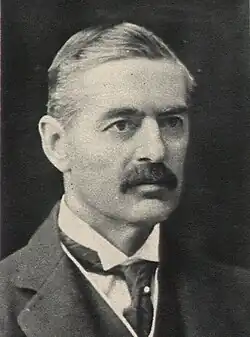
|
[80]
|
28 May 1937
|
10 May 1940
|
2 years, 349 days | — |
|
National IV | |||
| Chamberlain War | ||||||||||
.jpg)
|
[81]
|
10 May 1940
|
26 July 1945
|
5 years, 78 days | — |
|
Churchill War | |||
| Churchill Caretaker (Con–
| ||||||||||
.jpg)
|
[82]
|
26 July 1945
|
26 October 1951
|
6 years, 93 days | 1945 |
|
Labour | Attlee I | ||
| 1950 | Attlee II | |||||||||
|
|
[83]
|
26 October 1951
|
5 April 1955
|
3 years, 162 days | 1951 |
|
Conservative | Churchill III | ||
Elizabeth II r. 1952–2022
| ||||||||||
_(cropped).jpg)
|
[84]
|
6 April 1955
|
9 January 1957
|
1 year, 279 days | 1955 |
|
Eden | |||
.jpg)
|
[85]
|
10 January 1957
|
18 October 1963
|
6 years, 282 days | — |
|
Macmillan I | |||
| 1959 | Macmillan II | |||||||||
_(cropped).jpg)
|
[86]
|
19 October 1963
|
16 October 1964
|
364 days | — |
|
Conservative (Scot.U.)
|
Douglas-Home | ||
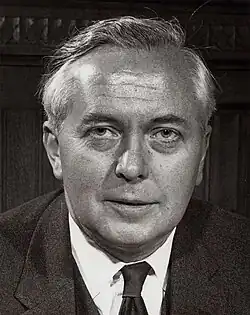
|
[87]
|
16 October 1964
|
19 June 1970
|
5 years, 247 days | 1964 |
|
Labour | Wilson I | ||
| 1966 | Wilson II | |||||||||
.jpg)
|
[88]
|
19 June 1970
|
4 March 1974
|
3 years, 259 days | 1970 |
|
Conservative | Heath | ||
|
|
[87]
|
4 March 1974
|
5 April 1976
|
2 years, 33 days | (Feb.1974) |
|
Labour | Wilson III | ||
| Oct.1974 | Wilson IV | |||||||||
.jpg)
|
[89]
|
5 April 1976
|
4 May 1979
|
3 years, 30 days | — |
|
Callaghan | |||
_(cropped).jpg)
|
[90]
|
4 May 1979
|
28 November 1990
|
11 years, 209 days | 1979 |
|
Conservative | Thatcher I | ||
| 1983 | Thatcher II | |||||||||
| 1987 | Thatcher III | |||||||||

|
[91]
|
28 November 1990
|
2 May 1997
|
6 years, 156 days | — |
|
Major I | |||
| 1992 | Major II | |||||||||
.jpg)
|
[92]
|
2 May 1997
|
27 June 2007
|
10 years, 57 days | 1997 |
|
Labour | Blair I | ||
| 2001 | Blair II | |||||||||
| 2005 | Blair III | |||||||||
.jpg)
|
[93]
|
27 June 2007
|
11 May 2010
|
2 years, 319 days | — |
|
Brown | |||
.jpg)
|
[94]
|
11 May 2010
|
13 July 2016
|
6 years, 64 days | (2010) |
|
Conservative | Cameron–Clegg (Con–
| ||
| 2015 | Cameron II | |||||||||
.jpg)
|
Theresa May [95]
|
13 July 2016
|
24 July 2019
|
3 years, 12 days | — |
|
May I | |||
| (2017) | May II (DUP confidence & supply) | |||||||||
.jpg)
|
[96]
|
24 July 2019
|
6 September 2022
|
3 years, 45 days | (—) |
|
Johnson I (DUP confidence & supply) | |||
| 2019 | Johnson II | |||||||||
.jpg)
|
Liz Truss [97]
|
6 September 2022
|
25 October 2022
|
50 days | — |
|
Truss | |||
Charles III.jpg) r. 2022–present
| ||||||||||

|
Rishi Sunak [98]
|
25 October 2022
|
5 July 2024
|
1 year, 255 days | — |
|
Sunak | |||
.jpg)
|
Keir Starmer [99]
|
5 July 2024
|
Incumbent | 1 year, 191 days | 2024 |
|
Labour | Starmer | ||
Living former prime ministers
- Living former prime minister showing periods in office with dates of birth and age
-
_(cropped).jpg)
-

-
.jpg)
-
.jpg)
-
.jpg) Theresa May
Theresa May
(2016–2019)
1 October 1956 -
.jpg)
-
_(cropped).jpg) Liz Truss
Liz Truss
(2022)
26 July 1975 -
.jpg) Rishi Sunak
Rishi Sunak
(2022–2024)
12 May 1980
Currently, there are eight living former Prime Ministers of the United Kingdom. The most recent death of a former prime minister was that of Margaret Thatcher (1979–1990) on 8 April 2013.
Disputed prime ministers
Due to the gradual evolution of the post of prime minister, the title is applied to early prime ministers only retrospectively;[23] this has sometimes given rise to academic dispute. William Pulteney, 1st Earl of Bath, and James Waldegrave, 2nd Earl Waldegrave, are sometimes listed as prime ministers.[100] Bath was invited to form a ministry by George II when Henry Pelham resigned in 1746,[101] as was Waldegrave in 1757 after the dismissal of William Pitt the Elder,[102] who dominated the affairs of government during the Seven Years' War. Neither was able to command sufficient parliamentary support to form a government; Bath stepped down after two days[100] and Waldegrave after four.[102] Modern academic consensus does not consider either man to have held office as prime minister;[103] they are therefore listed separately.
- Whig (2)
| Portrait | Prime minister Office (lifespan)
|
Term of office | Mandate[a] | Ministerial offices held as prime minister | Party | Government | Monarch Reign
| |||
|---|---|---|---|---|---|---|---|---|---|---|
| Start | End | Duration | ||||||||
| | .jpg)
|
William Pulteney
|
10 February 1746
|
12 February 1746
|
3 days
|
– |
|
Whig | Short-lived | George II r. 1727–1760
|
.JPG)
|
James Waldegrave
|
8 June 1757
|
12 June 1757
|
5 days
|
– |
|
Waldegrave | |||
List notes
- ^ a b Legend for the Mandatecolumn:
- 1722a year
- indicates a general election won by the government or that led to the formation of a government (the year links to the election's article);
- (1830)a parenthesised year
- indicates an election resulting in no single party winning a Commons majority (the year links to the election's article);
- —a dash
- indicates the formation of a majority government without an election;
- (—)a parenthesised dash
- indicates the formation of a minority or coalition government during a hung parliament.
- ^ Walpole was made a peer five days before his resignation as Prime Minister (6 February) and thus relinquished his seat in the House of Commons.
- ^ a b c d e f g Died in office
- ^ a b Resigned on 10 February 1746, reappointed by George II on 12 February 1746.
- ^ As a peer of Scotland, Lord Bute sat in the House of Lords as a Scottish representative peer.
- ^ Pitt served as a Member of Parliament for the first five days of his premiership (30 July – 4 August 1766). He relinquished his Commons seat in order to take the office of Lord Privy Seal, which required his elevation to the House of Lords.
- ^ Lord North was the heir to an earldom and himself a commoner while using the courtesy title.
- ^ Pitt was returned an MP for a different constituency in the 1784 British general election.
- ^ a b As a peer of Ireland, Lord Palmerston sat in the House of Commons as a Member of Parliament for an English constituency which was enabled by the Acts of Union 1800.
- ^ Disraeli was elevated to the House of Lords in 1876, two years into his second premiership. Consequently, he relinquished his Commons seat as MP for Buckinghamshire.
- ^ Douglas-Home disclaimed his peerage as the Earl of Home on 23 October 1963, 4 days after his appointment as Prime Minister. He was returned an MP and took his seat in the House of Commons on 12 November 1963. He had no seats in either of the Houses of Parliament between the two dates.
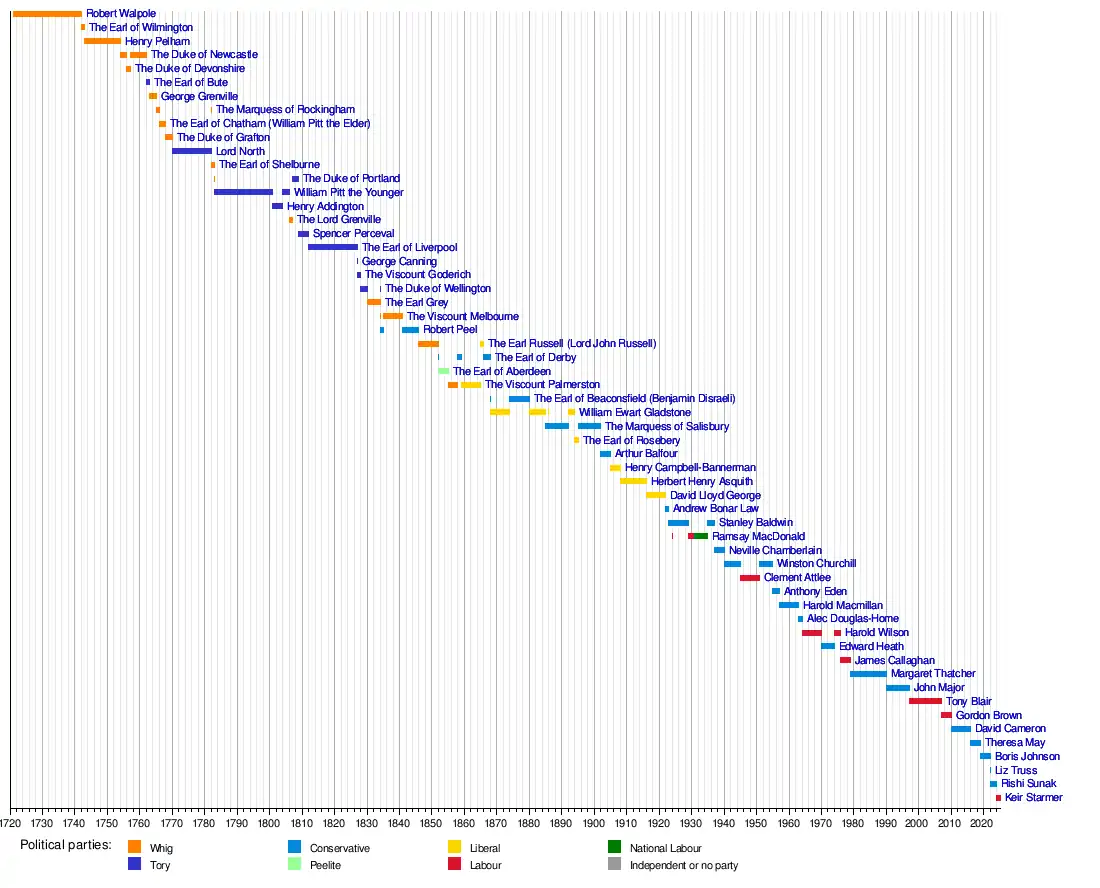
Timeline
See also
- Category:British premierships
- List of prime ministers of the United Kingdom by length of tenure
- List of prime ministers of the United Kingdom by education
- Assassination of Spencer Perceval
- Downing Street
- List of British governments
- List of current heads of government in the United Kingdom and dependencies
- List of prime ministers of Queen Victoria (for the United Kingdom of Great Britain and Ireland and the British Empire)
- Deputy Prime Minister of the United Kingdom
- List of United Kingdom general elections
- Royal prerogative in the United Kingdom
- List of government ministers of the United Kingdom
References
Citations
- ^ Hennessy 2001, pp. 39–40.
- ^ "Walpole, Robert, first earl of Orford (1676–1745), prime minister". Oxford Dictionary of National Biography (online ed.). Oxford University Press. doi:10.1093/ref:odnb/28601. Retrieved 11 April 2025. (Subscription, Wikipedia Library access or UK public library membership required.)
- ^ Castlereagh 1805.
- ^ Eardley-Wilmot 1885; Macfarlane 1885.
- ^ Clarke 1999, p. 266; Hennessy 2001, pp. 39–40.
- ^ BBC News 1998.
- ^ Burt 1874, p. 106; Castlereagh 1805.
- ^ Bogdanor 1997.
- ^ Marriott 1923, p. 83.
- ^ Law 1922.
- ^ Royal and Parliamentary Titles Act 1927.
- ^ a b Chisholm 1911f.
- ^ a b Pollard 1904.
- ^ a b Chisholm 1911a.
- ^ Chisholm 1911c.
- ^ Chapman 2002.
- ^ Fisher Russell Barker 1890; Stephen 1890.
- ^ Morrill 2018.
- ^ Chapman 2002, p. 15.
- ^ McMullen Rigg 1899.
- ^ a b c Chisholm 1911d; Chisholm 1911e.
- ^ Chisholm 1911b; McMullen Rigg 1899.
- ^ a b Leonard 2010, p. 1.
- ^ UK Government 2013.
- ^ Englefield, Seaton & White 1995, p. 413; Locker-Lampson 1907, p. 497.
- ^ Eccleshall & Walker 2002, pp. 1, 5; Englefield, Seaton & White 1995, pp. 1–5; Pryde et al. 1996, pp. 45–46.
- ^ Cook & Stevenson 1988, p. 41; Eccleshall & Walker 2002, p. 14; Englefield, Seaton & White 1995, pp. 7–10; Jones & Jones 1986, p. 222.
- ^ Cook & Stevenson 1988, pp. 41–42; Eccleshall & Walker 2002, p. 17; Englefield, Seaton & White 1995, pp. 11–15.
- ^ Eccleshall & Walker 2002, p. 28; Englefield, Seaton & White 1995, pp. 16–21.
- ^ Cook & Stevenson 1988, p. 44; Courthope 1838, p. 19; Eccleshall & Walker 2002, p. 34; Englefield, Seaton & White 1995, pp. 23–26; Schumann & Schweizer 2012, p. 143.
- ^ Cook & Stevenson 1980, p. 11; Eccleshall & Walker 2002, p. 28; Englefield, Seaton & White 1995, pp. 16–21; Pryde et al. 1996, p. 46; Tout 1910, p. 740.
- ^ Eccleshall & Walker 2002, p. 36; Englefield, Seaton & White 1995, pp. 28–31; Jones & Jones 1986, p. 223; Tout 1910, p. 740.
- ^ Eccleshall & Walker 2002, p. 42; Englefield, Seaton & White 1995, pp. 33–35; Tout 1910, p. 740.
- ^ a b The British Magazine and Review 1782, p. 79; Eccleshall & Walker 2002, pp. 46, 50; Englefield, Seaton & White 1995, pp. 39–43.
- ^ Eccleshall & Walker 2002, p. 54; Englefield, Seaton & White 1995, pp. 45–50; Kebbel 1864, p. 143; Venning 2005, p. 93.
- ^ Courthope 1838, p. 9; Eccleshall & Walker 2002, p. 61; Englefield, Seaton & White 1995, pp. 52–56; Venning 2005, p. 93; Vincitorio 1968, p. 156.
- ^ Eccleshall & Walker 2002, p. 64; Englefield, Seaton & White 1995, pp. 58–62; Whiteley 1996, p. 24.
- ^ Eccleshall & Walker 2002, p. 73; Englefield, Seaton & White 1995, pp. 64–68; Venning 2005, p. 93.
- ^ Cook & Stevenson 1980, p. 11; Courthope 1838, p. 25; Eccleshall & Walker 2002, p. 77; Englefield, Seaton & White 1995, pp. 69–74; Venning 2005, p. 93.
- ^ Eccleshall & Walker 2002, p. 85; Englefield, Seaton & White 1995, pp. 75–78; Evans 2008, p. 4.
- ^ Eccleshall & Walker 2002, p. 94; Englefield, Seaton & White 1995, pp. 83–85; Styles 1829, p. 266.
- ^ Eccleshall & Walker 2002, p. 85; Englefield, Seaton & White 1995, pp. 75–77; Evans 2008, p. 4.
- ^ Eccleshall & Walker 2002, p. 98; Englefield, Seaton & White 1995, pp. 90–92; Tout 1910, p. 740.
- ^ Courthope 1838, p. 25; Eccleshall & Walker 2002, p. 77; Englefield, Seaton & White 1995, pp. 69–74; Evans 2008, p. 4.
- ^ Eccleshall & Walker 2002, p. 101; Englefield, Seaton & White 1995, pp. 98–101; Evans 2008, p. 4.
- ^ Eccleshall & Walker 2002, p. 106; Englefield, Seaton & White 1995, pp. 104–108; Evans 2008, p. 4; Pryde et al. 1996, p. 47.
- ^ Eccleshall & Walker 2002, pp. 116, 133; Englefield, Seaton & White 1995, pp. 110–115.
- ^ Eccleshall & Walker 2002, pp. 120, 133; Englefield, Seaton & White 1995, pp. 118–120.
- ^ Courthope 1838, p. 33; Eccleshall & Walker 2002, p. 123; Englefield, Seaton & White 1995, pp. 124–130; Pryde et al. 1996, p. 47; Shaw 1906, p. 447; Tout 1910, p. 740.
- ^ Eccleshall & Walker 2002, p. 128; Englefield, Seaton & White 1995, pp. 133–139.
- ^ Eccleshall & Walker 2002, p. 136; Englefield, Seaton & White 1995, pp. 141–143.
- ^ Courthope 1838, p. 33; Eccleshall & Walker 2002, p. 123; Englefield, Seaton & White 1995, pp. 124–130; Evans 2001, p. 471; Mahon & Cardwell 1856, p. 17; Shaw 1906, p. 447.
- ^ a b Eccleshall & Walker 2002, p. 142; Englefield, Seaton & White 1995, pp. 148–153.
- ^ Eccleshall & Walker 2002, p. 136; Englefield, Seaton & White 1995, pp. 141–145; Pryde et al. 1996, p. 47.
- ^ a b Eccleshall & Walker 2002, p. 151; Englefield, Seaton & White 1995, pp. 155–160.
- ^ Eccleshall & Walker 2002, p. 161; Englefield, Seaton & White 1995, pp. 162–164.
- ^ Eccleshall & Walker 2002, pp. 159, 167; Englefield, Seaton & White 1995, pp. 169–174; Royal Society of Edinburgh 2006, p. 375; Tout 1910, p. 741.
- ^ Disraeli 1855; Eccleshall & Walker 2002, p. 174; Englefield, Seaton & White 1995, pp. 177–184; Royal Society 2007, p. 349.
- ^ Eccleshall & Walker 2002, p. 161; Englefield, Seaton & White 1995, pp. 162–164; Tout 1910, p. 741.
- ^ Balfour 1910; Eccleshall & Walker 2002, p. 174; Englefield, Seaton & White 1995, pp. 177–184; Royal Society 2007, p. 349.
- ^ Eccleshall & Walker 2002, p. 161; Englefield, Seaton & White 1995, pp. 162–167; Tout 1910, p. 741.
- ^ Disraeli 1868; Eccleshall & Walker 2002, p. 183; Englefield, Seaton & White 1995, pp. 187–189; Tout 1910, p. 741.
- ^ Eccleshall & Walker 2002, p. 196; Englefield, Seaton & White 1995, pp. 195–198; Royal Statistical Society 1892, p. 9.
- ^ Chamberlain 1884; Eccleshall & Walker 2002, p. 183; Englefield, Seaton & White 1995, pp. 187–192.
- ^ a b c Eccleshall & Walker 2002, p. 196; Englefield, Seaton & White 1995, pp. 195–202; Royal Statistical Society 1892, p. 9.
- ^ Eccleshall & Walker 2002, p. 213; Englefield, Seaton & White 1995, pp. 205–210; Mosley 2003, p. 3505.
- ^ Eccleshall & Walker 2002, p. 213; Englefield, Seaton & White 1995, pp. 205–210; Locker-Lampson 1907, p. 497; Mosley 2003, p. 3505; Sandys 1910, p. 287.
- ^ Eccleshall & Walker 2002, p. 222; Englefield, Seaton & White 1995, pp. 212–215.
- ^ Eccleshall & Walker 2002, pp. 213, 221; Englefield, Seaton & White 1995, pp. 205–210; Mosley 2003, p. 3505; Pryde et al. 1996, p. 47; Sandys 1910, p. 287.
- ^ Eccleshall & Walker 2002, p. 231; Englefield, Seaton & White 1995, pp. 217–221; Mosley 1999, p. 173; Tout 1910, p. 741.
- ^ Eccleshall & Walker 2002, p. 239; Englefield, Seaton & White 1995, pp. 223–227.
- ^ Butler & Butler 2010, p. 5; Eccleshall & Walker 2002, p. 244; Englefield, Seaton & White 1995, pp. 229–235; Pryde et al. 1996, p. 48.
- ^ Butler & Butler 2010, pp. 6–9; The Constitutional Yearbook 1919, p. 42; Eccleshall & Walker 2002, p. 252; Englefield, Seaton & White 1995, pp. 237–243.
- ^ Eccleshall & Walker 2002, p. 262; Englefield, Seaton & White 1995, pp. 246–248; Scully 2018.
- ^ Eccleshall & Walker 2002, p. 273; Englefield, Seaton & White 1995, pp. 253–255; Mosley 1999, p. 172.
- ^ Eccleshall & Walker 2002, p. 281; Englefield, Seaton & White 1995, pp. 262–264.
- ^ Eccleshall & Walker 2002, p. 273; Englefield, Seaton & White 1995, pp. 253–259; Mosley 1999, p. 172.
- ^ Butler & Butler 2010, p. 13; Eccleshall & Walker 2002, p. 281; Englefield, Seaton & White 1995, pp. 262–268.
- ^ Eccleshall & Walker 2002, p. 273; Englefield, Seaton & White 1995, pp. 253–259; Mosley 1999, p. 172; Pryde et al. 1996, p. 48.
- ^ The Annual Register 1941, p. 11; Eccleshall & Walker 2002, p. 289; Englefield, Seaton & White 1995, pp. 270–274.
- ^ The Annual Register 1946, p. 11; Butler & Butler 2010, pp. 17–21, 77; Eccleshall & Walker 2002, p. 295; Englefield, Seaton & White 1995, pp. 276–282; The London Gazette 1924.
- ^ Eccleshall & Walker 2002, p. 305; Englefield, Seaton & White 1995, pp. 284–289.
- ^ BBC On This Day 2005; Eccleshall & Walker 2002, p. 295; Englefield, Seaton & White 1995, pp. 276–282; The London Gazette 1924; Mosley 1999, p. 1868; Pryde et al. 1996, p. 48.
- ^ Eccleshall & Walker 2002, p. 315; Englefield, Seaton & White 1995, pp. 291–295.
- ^ Eccleshall & Walker 2002, p. 320; Englefield, Seaton & White 1995, pp. 297–303.
- ^ Eccleshall & Walker 2002, p. 329; Englefield, Seaton & White 1995, pp. 306–310; Scully 2018.
- ^ a b Eccleshall & Walker 2002, p. 333; Englefield, Seaton & White 1995, pp. 313–320.
- ^ Eccleshall & Walker 2002, p. 343; Englefield, Seaton & White 1995, pp. 322–328; UK Parliament 2005a.
- ^ Eccleshall & Walker 2002, p. 350; Englefield, Seaton & White 1995, pp. 331–333; UK Parliament 2005b.
- ^ Eccleshall & Walker 2002, p. 358; Englefield, Seaton & White 1995, pp. 340–347; UK Parliament 2013.
- ^ Butler & Butler 2010, p. 61; Eccleshall & Walker 2002, p. 384; Englefield, Seaton & White 1995, pp. 350–352.
- ^ Butler & Butler 2010, pp. 61, 270; Eccleshall & Walker 2002, p. 392; Seldon 2007, pp. 77, 371, 647; UK Parliament 2017b.
- ^ Butler & Butler 2010, pp. 61, 86; UK Parliament 2012.
- ^ Butler & Butler 2010, pp. 61, 65; Lee & Beech 2011; Royal Communications 2016; Wheeler 2016.
- ^ BBC News 2017; Stamp 2016; UK Parliament 2017a.
- ^ BBC News 2019; Kuenssberg 2019; UK Parliament 2022.
- ^ BBC News 2022a; Nevett & Whannel 2022; UK Parliament 2024a.
- ^ BBC News 2022b; Nevett 2022; UK Parliament 2024b.
- ^ BBC News 2024c; UK Parliament 2024e.
- ^ a b Carpenter 1992, p. 37.
- ^ Leonard 2010, p. 47.
- ^ a b Leonard 2010, p. 65.
- ^ Oxford Dictionary of National Biography 2011.
Works cited
- "1955: Sir Winston Churchill resigns". On This Day 1950–2005. BBC. Archived from the original on 2 April 2003. Retrieved 2 September 2018.
Churchill ... tendered his resignation as ... First Lord of the Treasury.
- Balfour, Arthur (29 March 1910). "Duration of Parliament". Parliamentary Debates (Hansard). Vol. 15. House of Commons. col. 1189. Archived from the original on 2 September 2018.
in 1860 ... Lord Palmerston, then the Leader of this House.
- "Baroness Thatcher". Parliament.uk. UK Parliament. Archived from the original on 20 April 2013. Retrieved 30 August 2018.
Deceased: 08 April 2013.
- Bogdanor, Vernon (3 October 1997). "Ministers take the biscuit". Times Higher Education. Archived from the original on 29 April 2018. Retrieved 28 April 2018.
The title ... was not used in an official document until 1878 when Disraeli ... signed the Treaty of Berlin as 'First Lord of the Treasury and Prime Minister of her Britannic Majesty'.
- "Boris Johnson replaces Theresa May as the UK's new prime minister". BBC News. 25 July 2019. Archived from the original on 27 June 2022. Retrieved 6 September 2022.
- Burt, Llewellyn Charles (1874). A Synoptical History of England (2nd ed.). London, UK: Lockwood – via the Internet Archive.
- Butler, David; Butler, Gareth (2010). British Political Facts (10th ed.). Palgrave Macmillan. ISBN 978-0-2302-9318-2.
- Carpenter, Clive, ed. (1992). The Guinness UK Data Book. Guinness. ISBN 978-0-8511-2522-0.
- Castlereagh, Viscount, President of the Board of Control (29 April 1805). "Military Commissioners' Bill". Parliamentary Debates (Hansard). Vol. 4. House of Commons. col. 496. Archived from the original on 22 February 2014.
- Chamberlain, Joseph, President of the Board of Trade (27 March 1884). "Second Reading — Adjourned Debate". Parliamentary Debates (Hansard). Vol. 286. House of Commons. col. 954. Archived from the original on 2 September 2018.
This matter was brought before the House on the 13th of May, 1874 ... It was opposed ... by Mr. Disraeli, who was then the Leader of the House.
- Chapman, Richard A. (2002). "History: from earliest times to the present day". The Treasury in Public Policy-Making. Routledge. ISBN 978-1-1348-6426-3.
- Chisholm, Hugh, ed. (1911a). "Burghley, William Cecil, Baron". Encyclopædia Britannica. Vol. 4 (11th ed.). Cambridge University Press.
- ——— (1911b). "Orford, Robert Walpole, 1st Earl of". Encyclopædia Britannica. Vol. 20 (11th ed.).
- ——— (1911c). "Salisbury, Robert Cecil, 1st Earl of". Encyclopædia Britannica. Vol. 24 (11th ed.).
- ——— (1911d). "Stanhope, Earls". Encyclopædia Britannica. Vol. 25 (11th ed.).
- ——— (1911e). "Sunderland, Charles Spencer, 3rd Earl of". Encyclopædia Britannica. Vol. 26 (11th ed.).
- ——— (1911f). "Treasury". Encyclopædia Britannica. Vol. 27 (11th ed.).
- Clarke, John (1999). "House of Hanover". In Fraser, Antonia (ed.). The Lives of the Kings & Queens of England. University of California Press (published 2000). ISBN 978-0-5202-2460-5.
- Cook, Chris; Stevenson, John (1980). British Historical Facts: 1760–1830 (1st ed.). Palgrave Macmillan. ISBN 978-0-3332-1512-8.
- ——— (1988). "Administrations and Political Biographies". British Historical Facts: 1688–1760 (1st ed.). Palgrave Macmillan. ISBN 978-1-3490-2369-1.
- Courthope, William, ed. (1838). Debrett's Complete Peerage of the United Kingdom of Great Britain and Ireland (22nd ed.). London, UK: J. G. & F. Rivington – via the Internet Archive.
His grace.
- "Deaths". The British Magazine and Review. Vol. 1. 1782.
The Most Honourable Charles Watson Wentworth.
- Disraeli, Benjamin (8 June 1855). "Prosecution of the War — Adjourned Debate (Sixth Night)". Parliamentary Debates (Hansard). Vol. 138. House of Commons. col. 1726. Archived from the original on 2 September 2018.
The noble Lord the leader of this House and First Minister of the Crown—a man eminently versed in foreign policy.
- Disraeli, Benjamin (7 May 1868). "Committee". Parliamentary Debates (Hansard). Vol. 191. House of Commons. col. 1930. Archived from the original on 2 September 2018.
the manner in which I attempt to perform my duties as Leader of this House is preferable to that ideal.
- Eccleshall, Robert; Walker, Graham, eds. (2002). Biographical Dictionary of British Prime Ministers (2nd ed.). Routledge. ISBN 978-1-1346-6230-2.
- Eardley-Wilmot, Sir John (20 March 1885). "Boroughs to Lose One Member". Parliamentary Debates (Hansard). Vol. 296. House of Commons. col. 156–157. Archived from the original on 21 May 2011.
- Englefield, Dermot; Seaton, Janet; White, Isobel (1995). Facts About the British Prime Ministers. Mansell Publishing. ISBN 978-0-7201-2306-7.
All Prime Ministers ... were members of the Privy Council ... This means they are entitled to be addressed as 'The Right Honourable'.
- Evans, Eric J. (2001). "Compendium of Information". The Forging of the Modern State: Early Industrial Britain, 1783–1870 (3rd ed.). Routledge (published 2013). ISBN 978-1-3178-7371-6.
- ——— (2008). "Introduction". Britain before the Reform Act: Politics and Society 1815–1832 (2nd ed.). Routledge (published 2014). ISBN 978-1-3178-8547-4.
- "First Lord of the Treasury". Gov.uk. UK Government. Archived from the original on 20 May 2013. Retrieved 3 September 2017.
- Fisher Russell Barker, George (1890). . In Stephen, Leslie; Lee, Sidney (eds.). Dictionary of National Biography. Vol. 24. London: Smith, Elder & Co.
- "Former Fellows of The Royal Society of Edinburgh" (PDF). Royal Society of Edinburgh. July 2006. Archived (PDF) from the original on 22 April 2012. Retrieved 28 August 2018.
- Hennessy, Peter (2001). "The Platonic Idea and the Constitutional Deal". The Prime Minister: The Office and Its Holders Since 1945. Palgrave Macmillan. ISBN 978-0-3122-9313-0.
- Jones, Clyve; Jones, David L., eds. (1986). "The Origin of the Leadership of the House of Lords". Peers, Politics and Power: House of Lords, 1603–1911. A & C Black. ISBN 978-0-9076-2878-1.
- Journal of the Royal Statistical Society. Vol. 55. London, UK: Royal Statistical Society. 1948 [First published 1892] – via the Internet Archive.
- Kebbel, Thomas Edward (1864). Essays Upon History and Politics. London, UK: Chapman and Hall – via the Internet Archive.
- "Keir Starmer vows to serve whole UK as new Labour PM". BBC News. 5 July 2024. Retrieved 5 July 2024.
- Kuenssberg, Laura (24 July 2019). "Boris Johnson: May bidding farewell before new PM takes office". BBC News. Archived from the original on 15 August 2022. Retrieved 6 September 2022.
- Law, Bonar (27 November 1922). "Irish Free State Constitution Bill". Parliamentary Debates (Hansard). Vol. 159. House of Commons. col. 327. Archived from the original on 27 April 2018.
- Lee, Simon; Beech, Matt, eds. (2011). The Cameron–Clegg Government: Coalition Politics in an Age of Austerity. Palgrave Macmillan. ISBN 978-0-2303-0501-4.
- Leonard, Dick (2010). Eighteenth-Century British Premiers: Walpole to the Younger Pitt. Palgrave Macmillan. ISBN 978-0-2303-0463-5.
- "List of Fellows of the Royal Society 1660–2007" (PDF). Royal Society. July 2007. Archived (PDF) from the original on 14 May 2014. Retrieved 28 August 2018.
- "Liz Truss: New prime minister installs allies in key cabinet roles". BBC News. 7 September 2022. Archived from the original on 7 September 2022. Retrieved 21 April 2024.
- Locker-Lampson, Godfrey (1907). A Consideration of the State of Ireland in the Nineteenth Century. London, UK: Archibald Constable and Co – via the Internet Archive.
- Macfarlane, Sir Donald Horne (14 April 1885). "Central Asia — Russia and Afghanistan — the Russo–Afghan Frontier — Russian Advances". Parliamentary Debates (Hansard). Vol. 296. House of Commons. col. 1634–1635. Archived from the original on 21 May 2011.
- Marriott, John (1923). English Political Institutions: An Introductory Study (2nd ed.). Oxford: Clarendon Press. OL 17361473W.
- "May to form 'government of certainty' with DUP backing". BBC News. 9 June 2017. Archived from the original on 10 June 2017. Retrieved 30 August 2018.
- McMullen Rigg, James (1899). . In Lee, Sidney (ed.). Dictionary of National Biography. Vol. 57. London: Smith, Elder & Co.
- Mahon, Viscount; Cardwell, Edward, eds. (1856). "Part II — The New Government; 1834–5". Memoirs by the Right Honourable Sir Robert Peel. London, UK: J. Murray. OL 23318495M.
- Mosley, Charles, ed. (1999). Burke's Peerage and Baronetage. Vol. 1–2 (106th ed.). Crans, Switzerland: Burke's Peerage (Genealogical Books).
- ——— (2003). Burke's Peerage, Baronetage & Knightage. Vol. 3 (107th ed.). Wilmington, US: Burke's Peerage (Genealogical Books).
- Morrill, John (25 January 2018). "Robert Harley, 1st earl of Oxford". Encyclopædia Britannica. Encyclopædia Britannica, Inc. Archived from the original on 5 September 2015. Retrieved 5 February 2018.
- "Mr Edward Heath". Parliamentary Debates (Hansard). Archived from the original on 16 June 2018. Retrieved 14 July 2018.
July 9, 1916 – 17 July 2005.
- "Mr James Callaghan". Parliamentary Debates (Hansard). Archived from the original on 23 June 2018. Retrieved 30 August 2018.
March 27, 1912 – 26 March 2005.
- "Mr. Lloyd George's War Administration, 1916". The Constitutional Yearbook. Vol. 33. National Unionist Association. 1919.
- "Mr. Neville Chamberlain's War Administration". The Annual Register. Vol. 182. Rivingtons. 1941.
- "Mr. Winston Churchill's War Administration". The Annual Register. Vol. 187. J. Dodsley. 1946.
- "No. 32987". The London Gazette. 31 October 1924. p. 7861.
The King has been graciously pleased to confer the Territorial Decoration upon the undermentioned Officers.
- Nevett, Joshua (25 October 2022). "Rishi Sunak vows to fix Liz Truss's mistakes in first speech as PM". BBC News. Archived from the original on 27 October 2022. Retrieved 21 April 2024.
- ———; Whannel, Kate (20 October 2022). "Liz Truss resigns: PM's exit kicks off another Tory leadership race". BBC News. Archived from the original on 20 October 2022. Retrieved 21 April 2024.
- "Parties and Prime Ministers". BBC News. 19 May 1998. Archived from the original on 18 March 2004. Retrieved 12 October 2008.
- Pollard, Albert (1904). . The Cambridge Modern History. Vol. 2 – via Wikisource.
- "Prime ministers of the United Kingdom (1730–2011)". Oxford Dictionary of National Biography. 2011. Archived from the original on 4 September 2017.
- Pryde, E. B.; Greenway, D. E.; Porter, S.; Roy, I., eds. (1996). Handbook of British Chronology (3rd ed.). Cambridge University Press. ISBN 978-0-5215-6350-5.
- "Resignation of The Right Honourable David Cameron MP as Prime Minister". Royal.uk (Press release). Royal Communications. 13 July 2016. Archived from the original on 18 August 2016. Retrieved 2 September 2018.
- "Rishi Sunak's first day as prime minister in pictures". BBC News. 25 October 2022. Archived from the original on 26 October 2022. Retrieved 21 April 2024.
- "Rt Hon Boris Johnson". Parliament.uk. UK Parliament. Archived from the original on 5 April 2022. Retrieved 6 September 2022.
First Lord of the Treasury, Minister for the Civil Service, and Minister for the Union.
- "Rt Hon Elizabeth Truss MP". Parliament.uk. UK Parliament. Archived from the original on 16 March 2024. Retrieved 21 April 2024.
First Lord of the Treasury and Minister for the Civil Service, and Minister for the Union.
- "Rt Hon Gordon Brown". Parliament.uk. UK Parliament. Archived from the original on 20 April 2012. Retrieved 30 August 2018.
First Lord of the Treasury and Minister for the Civil Service.
- "Rt Hon Keir Starmer". Parliament.uk. UK Parliament. Retrieved 5 July 2024.
- "Rt Hon Rishi Sunak MP". Parliament.uk. UK Parliament. Archived from the original on 21 April 2024. Retrieved 21 April 2024.
First Lord of the Treasury and Minister for the Civil Service, and Minister for the Union.
- "Rt Hon Theresa May". Parliament.uk. UK Parliament. Archived from the original on 10 June 2017. Retrieved 30 August 2018.
First Lord of the Treasury and Minister for the Civil Service.
- "Rt Hon Tony Blair". Parliament.uk. UK Parliament. Archived from the original on 19 November 2017. Retrieved 30 August 2018.
First Lord of the Treasury and Minister for the Civil Service.
- "Royal and Parliamentary Titles Act 1927", legislation.gov.uk, The National Archives, 1927 c. 4
- Sandys, John (1910). "Orationes et epistolae Cantabrigienses (1876–1909): Index". Nature. Vol. 84, no. 2124. London, UK: Macmillan. pp. 35–36. Bibcode:1910Natur..84...35T. doi:10.1038/084035a0. S2CID 3975449. Archived from the original on 20 February 2009 – via the Internet Archive.
The Most Hon. Robert Cecil, Marquess of Salisbury.
Alt URL - Schumann, Matt; Schweizer, Karl W. (2012). "Domestic politics". The Seven Years War: A Transatlantic History. Routledge. ISBN 978-1-1341-6068-6.
- Scully, Roger (2018). "The High-Point of British Party Politics". The End of British Party Politics?. Biteback Publishing. ISBN 978-1-7859-0363-2.
Yet the Scottish party was much more influential at Westminster: two of its major figures, Andrew Bonar Law and Sir Alec Douglas-Home, became (albeit short-lived) Prime Ministers.
- Seldon, Anthony, ed. (2007). Blair's Britain, 1997–2007. Cambridge University Press. ISBN 978-1-1394-6898-5.
- Shaw, William Arthur (1906). The Knights of England. Vol. 1. London, UK: Sherratt and Hughes – via the Internet Archive.
- Stephen, Leslie (1890). . In Stephen, Leslie; Lee, Sidney (eds.). Dictionary of National Biography. Vol. 22. London: Smith, Elder & Co.
- Styles, John, ed. (1829). Memoirs of the Life of the Right Honourable George Canning. Vol. 1. London, UK: T. Tegg – via the Internet Archive.
- Stamp, Gavin (25 July 2016). "Who is Theresa May: A profile of UK's new prime minister". BBC News. Archived from the original on 13 July 2016. Retrieved 30 August 2018.
- Tout, Thomas Frederick (1910). An Advanced History of Great Britain. New York, US: Longmans, Green. OL 13991885M.
- Venning, Timothy (2005). "Prime Ministers". Compendium of British Office Holders. Palgrave Macmillan. ISBN 978-0-2305-0587-2.
- Vincitorio, Gaetano L., ed. (1968). Studies in Modern History. New York, US: St. John's University Press. OCLC 908430.
- Wheeler, Brian (12 September 2016). "The David Cameron story". BBC News. Archived from the original on 24 June 2016. Retrieved 30 August 2018.
- Whiteley, Peter (1996). "Political Apprenticeship". Lord North: The Prime Minister Who Lost America. A & C Black. ISBN 978-1-8528-5145-3.
Further reading
- Bogdanor, Vernon, ed. (2010). From New Jerusalem to New Labour: British Prime Ministers from Attlee to Blair. Palgrave Macmillan (published 20 October 2016). ISBN 978-0-230-29700-5.
- Browne, J. Houston (1858). Lives of the Prime Ministers of England: From the Restoration to the Present Time. Vol. 1. London: Thomas Cautley Newby.
- Davidson, Jonathan (2010). Downing Street Blues: A History of Depression and Other Mental Afflictions in British Prime Ministers. McFarland & Company. ISBN 978-0-7864-5793-9.
- Grube, Dennis (2013). Prime Ministers and Rhetorical Governance. Palgrave Macmillan. ISBN 978-1-137-31836-7.
- King, Anthony Stephen, ed. (1985). The British Prime Minister (2nd ed.). Duke University Press. ISBN 978-0-8223-0635-1.
- Leonard, Dick (2008). Nineteenth Century Premiers: Pitt to Rosebery. Palgrave Macmillan. ISBN 978-0-230-22725-5.
- Mackay, Robert (28 December 1987). "Thatcher longest serving British prime minister". United Press International. Archived from the original on 3 March 2016. Retrieved 26 June 2017.
- Parker, Robert J. (2013). British Prime Ministers (2nd ed.). Amberley Publishing. ISBN 978-1-4456-1021-4.
- Quinault, Roland (2011). British Prime Ministers and Democracy: From Disraeli to Blair. Bloomsbury Publishing. ISBN 978-1-4411-1105-0.
External links
- "Past Prime Ministers". Gov.uk. UK Government. Archived from the original on 25 August 2008.
- "Prime Ministers and Politics Timeline". History. BBC. Archived from the original on 27 May 2011.