King
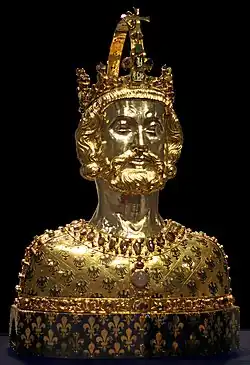
| Part of a series on |
| Imperial, royal, noble, gentry and chivalric ranks in Europe |
|---|
.svg.png) |
|
|
|
|
|
|
|
|
King is the title given to a male monarch in a variety of contexts. A king is an absolute monarch if he holds the powers of government without control, or the entire sovereignty over a nation; he is a limited monarch if his power is restrained by fixed laws; and he is an absolute, when he holds the whole legislative, judicial, and executive power, or when the legislative or judicial powers, or both, are vested in other people by the king. Kings are hereditary sovereigns when they hold the powers of government by right of birth or inheritance, and elective when raised to the throne by choice.
- In the context of prehistory, antiquity and contemporary indigenous peoples, the title may refer to tribal kingship. Germanic kingship is cognate with Indo-European traditions of tribal rulership (c.f. Indic rājan, Gothic reiks, and Old Irish rí, etc.).
- In the context of classical antiquity, king may translate in Latin as rex and in Greek as archon or basileus.
- In classical European feudalism, the title of king as the ruler of a kingdom is understood to be the highest rank in the feudal order, potentially subject, at least nominally, only to an emperor (harking back to the client kings of the Roman Republic and Roman Empire).[1]
- In a modern context, the title may refer to the ruler of one of a number of modern monarchies (either absolute or constitutional). The title of king is used alongside other titles for monarchs: in the West, emperor, grand prince, prince, archduke, duke or grand duke, and in the Islamic world, malik, sultan, emir or hakim, etc.[2]
- The city-states of the Aztec Empire each had a tlatoani. These were the kings of pre-Hispanic Mesoamerica. The Huey Tlatoani was the emperor of the Aztecs.[3]
The term king may also refer to a king consort, a title that is sometimes given to the husband of a queen regnant, but the title of prince consort is more common.
Etymology
The word king is derived from the Anglo-Saxon cyning, meaning “ruler” or “leader,” derived from Proto-Germanic kuningaz. This root also gave rise to similar terms across other Germanic languages, such as Dutch koning, Old Norse konungr, Danish konge, and German König. The precise origin of "kuningaz" remains uncertain, but it may be linked to Old English cynn (“family, race”), suggesting that a king was originally viewed as the “leader of the kin” or “head of the people.” It is a derivation from the term *kunjom "kin" (Old English cynn) by the -inga- suffix. The literal meaning is that of a "scion of the [noble] kin", or perhaps "son or descendant of one of noble birth" (OED).
The English term translates, and is considered equivalent to, Latin rēx and its equivalents in the various European languages. The Germanic term is notably different from the word for "King" in other Indo-European languages (*rēks "ruler"; Latin rēx, Sanskrit rājan and Irish ríg; however, see Gothic reiks and, e.g., modern German Reich and modern Dutch rijk).[4]
History
The English word is of Germanic origin, and historically refers to Germanic kingship, in the pre-Christian period a type of tribal kingship. The monarchies of Europe in the Christian Middle Ages derived their claim from Christianisation and the divine right of kings, partly influenced by the notion of sacral kingship inherited from Germanic antiquity.
The Early Middle Ages begin with a fragmentation of the former Western Roman Empire into barbarian kingdoms. In Western Europe, the kingdom of the Franks developed into the Carolingian Empire by the 8th century, and the kingdoms of Anglo-Saxon England were unified into the kingdom of England by the 10th century.
With the breakup of the Carolingian Empire in the 9th century, the system of feudalism places kings at the head of a pyramid of relationships between liege lords and vassals, dependent on the regional rule of barons, and the intermediate positions of counts (or earls) and dukes. The core of European feudal manorialism in the High Middle Ages were the territories of the former Carolingian Empire, i.e. the kingdom of France and the Holy Roman Empire (centered on the nominal kingdoms of Germany and Italy).[5]
In the course of the European Middle Ages, the European kingdoms underwent a general trend of centralisation of power, so that by the Late Middle Ages there were a number of large and powerful kingdoms in Europe, which would develop into the great powers of Europe in the Early Modern period.
- In the Iberian Peninsula, the remnants of the Visigothic Kingdom, the petty kingdoms of Asturias and Pamplona, expanded into the kingdom of Portugal, the Crown of Castile and the Crown of Aragon with the ongoing Reconquista.
- In southern Europe, the kingdom of Sicily was established following the Norman conquest of southern Italy. The Kingdom of Sardinia was claimed as a separate title held by the Crown of Aragon in 1324. In the Balkans, the Kingdom of Serbia was established in 1217.
- In central Europe, the Kingdom of Hungary was established in AD 1000 following the Christianisation of the Magyars. The kingdoms of Poland and Bohemia were established within the Holy Roman Empire in 1025 and 1198, respectively.
- In eastern Europe, the Grand Duchy of Moscow did not technically claim the status of kingdom until the early modern Tsardom of Russia.
- In northern Europe, the tribal kingdoms of the Viking Age by the 11th century expanded into the North Sea Empire under Cnut the Great, king of Denmark, England and Norway. The Christianization of Scandinavia resulted in "consolidated" kingdoms of Sweden and Norway, and by the end of the medieval period the pan-Scandinavian Kalmar Union.
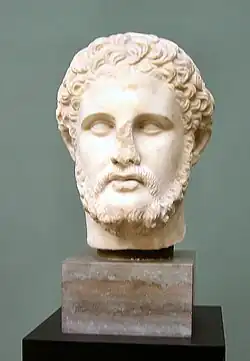
Current kings
| Part of the Politics series |
| Monarchy |
|---|
.svg.png) |
 Politics portal Politics portal |
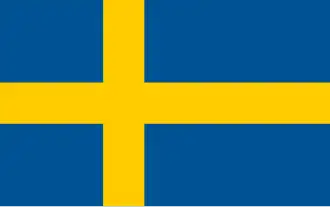
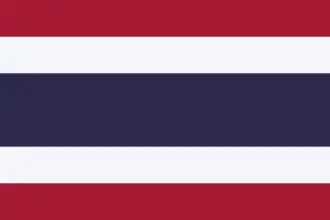
Currently (as of 2023), eighteen kings are recognized as the heads of state of sovereign states. Most of these kings serve as heads of state in constitutional monarchies. However, those ruling over absolute monarchies include the King of Saudi Arabia and the King of Eswatini.[6][7]
| Sovereign state | Portrait | King | Title | House | Since | Monarchy |
|---|---|---|---|---|---|---|
 Antigua and Barbuda Antigua and Barbuda
|
.jpg) |
Charles III | King |
|
8 September 2022 | Hereditary, constitutional |
.svg.png) Australia Australia
|
King | |||||
 The Bahamas The Bahamas
|
King | |||||
 Belize Belize
|
King | |||||
.svg.png) Canada Canada
|
King, Roi | |||||
 Grenada Grenada
|
King | |||||
 Jamaica Jamaica
|
King | |||||
 New Zealand New Zealand
|
King, Kīngi | |||||
 Papua New Guinea Papua New Guinea
|
King | |||||
 Saint Kitts and Nevis Saint Kitts and Nevis
|
King | |||||
 Saint Lucia Saint Lucia
|
King | |||||
 Saint Vincent and the Grenadines Saint Vincent and the Grenadines
|
King | |||||
 Solomon Islands Solomon Islands
|
King | |||||
 Tuvalu Tuvalu
|
King | |||||
 United Kingdom United Kingdom |
King | |||||
 Bahrain Bahrain
|
 |
Hamad bin Isa Al Khalifa | ملك (malik) | Khalifa | 14 February 2002 | Hereditary, semi-constitutional |
.svg.png) Belgium Belgium
|
.jpg) |
Philippe | Koning, Roi, König | Saxe-Coburg and Gotha | 21 July 2013 | Hereditary, constitutional |
 Bhutan Bhutan
|
 |
Jigme Khesar Namgyel Wangchuck | འབྲུག་རྒྱལ་པོ་ (druk gyalpo) | Wangchuck | 9 December 2006 | Hereditary, constitutional |
 Cambodia Cambodia
|
.jpg) |
Norodom Sihamoni | ស្ដេច (sdac) | Norodom | 14 October 2004 | Elective, constitutional |
 Denmark Denmark
|
 |
Frederik X | Konge |
|
14 January 2024 | Hereditary, constitutional |
 Eswatini Eswatini
|
.jpg) |
Mswati III | Ngwenyama | Dlamini | 25 April 1986 | Hereditary, absolute |
 Jordan Jordan
|
.jpg) |
Abdullah II | ملك (malik) | Hashim | 7 February 1999 | Hereditary, semi-constitutional |
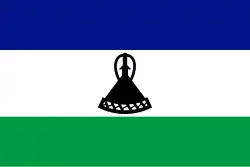 Lesotho Lesotho
|
 |
Letsie III | Morena, King | Moshesh | 7 February 1996 | Hereditary, constitutional |
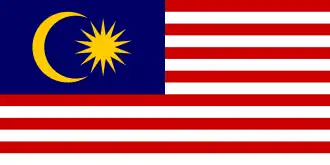 Malaysia Malaysia
|
 |
Ibrahim Iskandar | Yang di-Pertuan Agong (يڠ دڤرتوان اݢوڠ) | Temenggong | 31 January 2024 | Elective, constitutional |
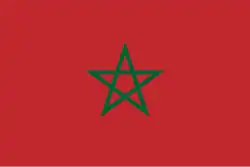 Morocco Morocco
|
_(cropped).jpg) |
Mohammed VI | ملك (malik), ⴰⴳⵍⵍⵉⴷ (agllid) | Alawi | 23 July 1999 | Hereditary, semi-constitutional |
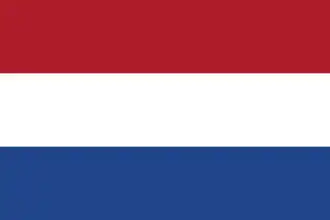 Netherlands Netherlands
|
.jpeg) |
Willem-Alexander | Koning |
|
30 April 2013 | Hereditary, constitutional |
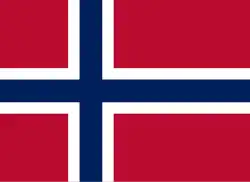 Norway Norway
|
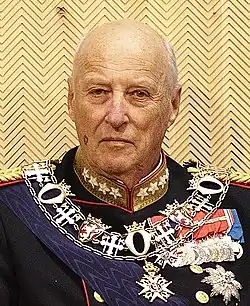 |
Harald V | Konge | Glücksburg | 17 January 1991 | Hereditary, constitutional |
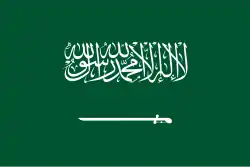 Saudi Arabia Saudi Arabia
|
_(cropped).jpg) |
Salman | ملك (malik) | Saud | 23 January 2015 | Hereditary, absolute |
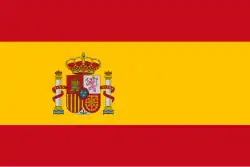 Spain Spain
|
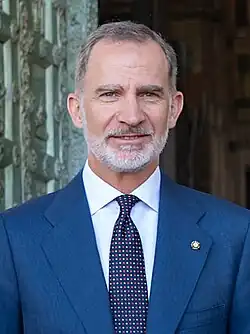 |
Felipe VI | Rey | Bourbon | 19 June 2014 | Hereditary, constitutional |
 Sweden Sweden
|
_(cropped).jpg) |
Carl XVI Gustaf | Konung | Bernadotte | 15 September 1973 | Hereditary, constitutional |
 Thailand Thailand
|
_(cropped).png) |
Vajiralongkorn (Rama X) | กษัตริย์ (kasat) | Chakri | 13 October 2016 | Hereditary, constitutional |
 Tonga Tonga
|
 |
Tupou VI | Tuʻi, King | Tupou | 18 March 2012 | Hereditary, constitutional |
See also
- Anointing
- Big man (anthropology)
- Buddhist kingship
- Client king
- Coronation
- Designation
- Divine right of kings
- Germanic kingship
- Great King
- High King
- King consort
- King of Kings
- Petty king
- Queen
- Realm
- Royal and noble ranks
- Royal family
- Sacred king
- Tribal kingship
- Titles translated as "king"
Notes
- ^ The notion of a king being below an emperor in the feudal order, just as a duke is the rank below a king, is more theoretical than historical. The only kingdom title held within the Holy Roman Empire was the Kingdom of Bohemia, with the Kingdoms of Germany, Italy and Burgundy/Arles being nominal realms. The titles of King of the Germans and King of the Romans were non-landed titles held by the Emperor-elect (sometimes during the lifetime of the previous Emperor, sometimes not), although there were anti-Kings at various points; Arles and Italy were either held directly by the Emperor or not at all. The Austrian and Austro-Hungarian Empires technically contained various kingdoms (Hungary, Bohemia, Dalmatia, Illyria, Lombardy–Venetia and Galicia and Lodomeria, as well as the Kingdoms of Croatia and Slavonia which were themselves subordinate titles to the Hungarian Kingdom and which were merged as Croatia-Slavonia in 1868), but the emperor and the respective kings were the same person. The Russian Empire did not include any kingdoms. The short-lived First French Empire (1804–1814/5) included a number of client kingdoms under Napoleon I, such as the Kingdom of Italy, the Kingdom of Westphalia, the Kingdom of Etruria, the Kingdom of Württemberg, the Kingdom of Bavaria, the Kingdom of Saxony and the Kingdom of Holland. The German Empire (1871–1918) included the Kingdoms of Prussia, Bavaria, Württemberg and Saxony, with the Prussian king also holding the Imperial title.
- ^ Pine, L.G. (1992). Titles: How the King became His Majesty. New York: Barnes & Noble. p. 86. ISBN 978-1-56619-085-5.
- ^ History Crunch Writers. "Aztec Emperors (Huey Tlatoani)". History Crunch - History Articles, Summaries, Biographies, Resources and More. Retrieved 18 April 2021.
- ^ "Search 'king' on etymonline".
- ^ see e.g. M. Mitterauer, Why Europe?: The Medieval Origins of Its Special Path, University of Chicago Press (2010), p. 28.
- ^ "Saudi Arabia: Country Profile".
- ^ "Africa's Eswatini, one of the last absolute monarchies, holds an election without political parties". Associated Press News. 29 September 2023.
References
- Cannadine, David; Price, Simon, eds. (1987). Rituals of Royalty: Power and Ceremonial in Traditional Societies. Cambridge University Press. ISBN 0-521-33513-2. LCCN 86-29881.
- Craughwell, Thomas J. (2009). 5,000 Years of Royalty: Kings, Queens, Princes, Emperors & Tsars. Black Dog & Leventhal Publishers. ISBN 978-1-60376-189-5.
- Hani, Jean (2011). Sacred Royalty: From the Pharaoh to the Most Christian King. The Matheson Trust. ISBN 978-1-908092-05-2.
External links

 Media related to Kings at Wikimedia Commons

- Phillip, Walter Alison (1911). . Encyclopædia Britannica. Vol. 15 (11th ed.). pp. 805–806.