Maurice Jarre
Maurice Jarre | |
|---|---|
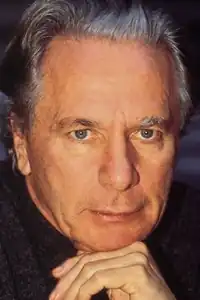 | |
| Born | Maurice-Alexis Jarre 13 September 1924 Lyon, France |
| Died | 28 March 2009 (aged 84) Los Angeles, California, U.S. |
| Alma mater | |
| Years active | 1958–2001 |
| Spouses | France Pejot
(m. 1946; div. 1964)Dany Saval
(m. 1965; div. 1967)Laura Devon
(m. 1967; div. 1984)Fui Fong Khong (m. 1984) |
| Children | 3, including Jean-Michel and Kevin |
| Musical career | |
| Genres |
|
| Occupations |
|
| Works | See below |
Maurice-Alexis Jarre (French pronunciation: [mɔʁis alɛksi ʒaʁ]; 13 September 1924 – 28 March 2009) was a French composer and conductor, mainly of film scores. He was particularly known for his collaborations with film director David Lean, composing the scores to all of his films from 1962 to 1984. He received numerous accolades over the course of his career, including three Academy Awards, three BAFTA Awards, four Golden Globes, and a Grammy Award.
Jarre won three Academy Awards for Best Original Score for the David Lean films Lawrence of Arabia (1962), Doctor Zhivago (1965), and A Passage to India (1984). He was Oscar-nominated for Sundays and Cybèle (1962), The Message (1976), Witness (1985), Gorillas in the Mist (1988), and Ghost (1990). Notable scores also include Eyes Without a Face (1959), The Longest Day (1962), The Train (1964), The Collector (1965), Grand Prix (1966), The Man Who Would Be King (1975), The Year of Living Dangerously (1982), Fatal Attraction (1987), and Dead Poets Society (1989). He worked with such directors as Alfred Hitchcock, Elia Kazan, John Huston, Luchino Visconti, John Frankenheimer, and Peter Weir.
Three of his compositions spent a total of 42 weeks on the UK singles chart. The biggest hit was "Somewhere My Love" (to his tune "Lara's Theme", with lyrics by Paul Francis Webster) performed by the Mike Sammes Singers, which reached Number 14 in 1966 and spent 38 weeks on the chart.
Jarre was the father of musician Jean-Michel Jarre and the adoptive father of screenwriter Kevin Jarre.
Early life and education
Maurice-Alexis Jarre was born on 13 September 1924 in Lyon, France,[1][2][3] the son of Gabrielle Renée (née Boullu) and André Jarre, a radio technical director.
He first enrolled in the engineering school at the Sorbonne, but decided to pursue music courses instead. He left the Sorbonne against his father's will and enrolled at the Conservatoire de Paris to study composition and harmony and chose percussion as his major instrument.[3]
He became director of the Théâtre National Populaire and recorded his first film score in France in 1951.[4] He wrote the score for Toute la mémoire du monde by Alain Resnais. In 1954, his radio opera, Ruisselle,[5] won the Prix Italia for musical works in Perugia.[6]
Film scoring
In 1961, Jarre's music career experienced a major change when American film producer Sam Spiegel asked him to write the score for the 1962 epic Lawrence of Arabia, directed by David Lean. The acclaimed score won Jarre his first Academy Award and he would go on to compose the scores to all of Lean's subsequent films. He followed with The Train (1964) and Grand Prix (1966), both for director John Frankenheimer, and in between had another great success in David Lean's Doctor Zhivago, which included the lyricless tune "Lara's Theme" (later the tune for the song "Somewhere My Love"), and which earned him his second Oscar. He worked with Alfred Hitchcock on Topaz (1969): although Hitchcock's experiences with the film were unhappy, he was satisfied with Jarre's score, telling him, "I have not given you a great film, but you have given me a great score."
Jarre's score for David Lean's Ryan's Daughter (1970), set in Ireland, completely eschews traditional Irish music styles, according to Lean's preferences. The song "It Was a Good Time," from Ryan's Daughter went on to be recorded by musical stars such as Liza Minnelli who used it in her critically acclaimed television special Liza with a Z as well as by others during the 1970s. He contributed the music for Luchino Visconti's The Damned (1969), and John Huston's The Man Who Would Be King (1975).
He was again nominated for an Academy Award for scoring The Message in 1976, for the director and producer Moustapha Akkad. He followed with Witness (1985) and Dead Poets Society (1989), for which he won a British Academy Award.
In the 1970s and 1980s, Jarre turned his hand to science fiction, with scores for The Island at the Top of the World (1974), Dreamscape (1984), Enemy Mine (1985), and Mad Max Beyond Thunderdome (1985). The latter is written for full orchestra, augmented by a chorus, four grand pianos, a pipe organ, digeridoo, fujara, a battery of exotic percussion, and three ondes Martenot, which feature in several of Jarre's other scores, including Lawrence of Arabia, Jesus of Nazareth, The Bride and Prancer. The balalaika features prominently in Jarre's score for Doctor Zhivago.
In 1990, Jarre was again nominated for an Academy Award scoring the supernatural love story/thriller Ghost. His music for the final scene of the film is based on "Unchained Melody" composed by fellow film composer Alex North.[3] Other films for which he provided the music include A Walk in the Clouds (1995), for which he wrote the score and all of the songs, including the romantic "Mariachi Serenade". Also to his credit is the passionate love theme from Fatal Attraction (1987), and the moody electronic soundscapes of After Dark, My Sweet (1990). He was well respected by other composers including John Williams, who stated, on Jarre's death, "(He) is to be well remembered for his lasting contribution to film music ... we all have been enriched by his legacy."[7]
Jarre's television work includes the theme for the short-lived 1967 Western series on CBS, Cimarron Strip, his score for the miniseries Jesus of Nazareth (1977), directed by Franco Zeffirelli, Shōgun (1980), and the theme for PBS's Great Performances.[3]
Jarre scored his last project in 2001, a television mini-series about the Holocaust titled Uprising.[3]
He was "one of the giants of 20th-century film music"[8] who was "among the most sought-after composers in the movie industry" and "a creator of both subtle underscoring and grand, sweeping themes, not only writing for conventional orchestras ... but also experimenting with electronic sounds later in his career".[9]
Style and artistry
Jarre wrote mainly for orchestras, but began to favour synthesized music in the 1980s. Jarre pointed out that his electronic score for Witness was actually more laborious, time-consuming and expensive to produce than an orchestral score. Jarre's electronic scores from the 1980s also include Fatal Attraction, The Year of Living Dangerously, Firefox and No Way Out. A number of his scores from that era also feature electronic / acoustic blends, such as Gorillas in the Mist, Dead Poets Society, The Mosquito Coast and Jacob's Ladder.
Personal life
Marriages and family
Jarre was married four times, the first three marriages ending in divorce. In the 1940s, his marriage to Francette Pejot, a French Resistance member and concentration camp survivor, produced a son, Jean-Michel Jarre, a French composer, performer, and music producer, who is one of the pioneers in electronic music. When Jean-Michel was five years old, Maurice split up with his wife and moved to the United States, leaving Jean-Michel with his mother in France.[10]
In 1965, Jarre married French actress Dany Saval; together they had a daughter, Stephanie Jarre. He next married American actress Laura Devon (1967–1984), resulting in his adopting her son, Kevin Jarre, a screenwriter, with credits on such films as Tombstone and Glory (1989). From 1984 to his death, he was married to Fui Fong Khong.[11]
Death
Jarre died of cancer on 28 March 2009 in Los Angeles.[12]
Filmography
Film
| Year | Title | Director | Notes |
|---|---|---|---|
| 1957 | Burning Fuse | Henri Decoin | Composed with Louis Gasté & Philippe Gérard |
| 1958 | Head Against the Wall | Georges Franju | |
| 1959 | Les Dragueurs | Jean-Pierre Mocky | |
| Beast at Bay | Pierre Chenal | ||
| Stars at Noon | Jacques Ertaud Marcel Ichac |
||
| Vous n'avez rien à déclarer? | Clément Duhour | ||
| Eyes Without a Face | Georges Franju | ||
| 1960 | La main chaude | Gérard Oury | |
| Lovers on a Tightrope | Jean-Charles Dudrumet | ||
| Crack in the Mirror | Richard Fleischer | ||
| Recourse in Grace | László Benedek | ||
| 1961 | The President | Henri Verneuil | |
| Spotlight on a Murderer | Georges Franju | ||
| The Big Gamble | Richard Fleischer | ||
| Three Faces of Sin | François Villiers | ||
| Famous Love Affairs | Michel Boisrond | ||
| 1962 | Les oliviers de la justice | James Blue | |
| Sun in Your Eyes | Jacques Bourdon | ||
| Thérèse Desqueyroux | Georges Franju | ||
| The Longest Day | Ken Annakin Andrew Marton Bernhard Wicki |
||
| Sundays and Cybele | Serge Bourguignon | ||
| L'oiseau de paradis | Marcel Camus | ||
| Lawrence of Arabia | David Lean | ||
| To Die in Madrid | Frédéric Rossif | ||
| 1963 | A King Without Distraction | François Leterrier | |
| Judex | Georges Franju | ||
| 1964 | Mort, où est ta victoire? | Hervé Bromberger | |
| Behold a Pale Horse | Fred Zinnemann | ||
| The Train | John Frankenheimer | ||
| Weekend at Dunkirk | Henri Verneuil | ||
| 1965 | The Collector | William Wyler | |
| Doctor Zhivago | David Lean | ||
| 1966 | The Professionals | Richard Brooks | |
| Is Paris Burning? | René Clément | ||
| Gambit | Ronald Neame | ||
| Grand Prix | John Frankenheimer | ||
| 1967 | The Night of the Generals | Anatole Litvak | |
| The 25th Hour | Henri Verneuil | Composed with Georges Delerue | |
| 1968 | Villa Rides | Buzz Kulik | |
| 5 Card Stud | Henry Hathaway | ||
| The Fixer | John Frankenheimer | ||
| Isadora | Karel Reisz | ||
| 1969 | The Extraordinary Seaman | John Frankenheimer | |
| The Damned | Luchino Visconti | ||
| Topaz | Alfred Hitchcock | ||
| 1970 | The Only Game in Town | George Stevens | |
| El Condor | John Guillermin | ||
| Ryan's Daughter | David Lean | ||
| 1971 | Plaza Suite | Arthur Hiller | |
| Red Sun | Terence Young | ||
| A Season in Hell | Nelo Risi | ||
| 1972 | Pope Joan | Michael Anderson | |
| The Life and Times of Judge Roy Bean | John Huston | ||
| The Effect of Gamma Rays on Man-in-the-Moon Marigolds | Paul Newman | ||
| 1973 | Ash Wednesday | Larry Peerce | |
| The Mackintosh Man | John Huston | ||
| 1974 | The Island at the Top of the World | Robert Stevenson | |
| 1975 | Mandingo | Richard Fleischer | Composed with Muddy Waters |
| Posse | Kirk Douglas | ||
| The Man Who Would Be King | John Huston | ||
| Mr. Sycamore | Pancho Kohner | ||
| 1976 | Shout at the Devil | Peter R. Hunt | |
| The Last Tycoon | Elia Kazan | ||
| The Message | Moustapha Akkad | ||
| 1977 | The Prince and the Pauper | Richard Fleischer | |
| March or Die | Dick Richards | ||
| 1978 | Like a Turtle on Its Back | Luc Béraud | |
| Two Solitudes | Lionel Chetwynd | ||
| 1979 | The Tin Drum | Volker Schlöndorff | |
| Winter Kills | William Richert | ||
| The Magician of Lublin | Menahem Golan | ||
| 1980 | The American Success Company | William Richert | |
| The Black Marble | Harold Becker | ||
| The Last Flight of Noah's Ark | Charles Jarrott | ||
| Resurrection | Daniel Petrie | ||
| 1981 | Lion of the Desert | Moustapha Akkad | |
| Chu Chu and the Philly Flash | David Lowell Rich | Composed with Pete Rugolo | |
| Circle of Deceit | Volker Schlöndorff | ||
| Taps | Harold Becker | ||
| 1982 | Don't Cry, It's Only Thunder | Peter Werner | |
| Firefox | Clint Eastwood | ||
| Young Doctors in Love | Garry Marshall | ||
| The Year of Living Dangerously | Peter Weir | ||
| 1983 | For Those I Loved | Robert Enrico | |
| 1984 | Top Secret! | Jim Abrahams David Zucker Jerry Zucker |
|
| Dreamscape | Joseph Ruben | ||
| A Passage to India | David Lean | ||
| 1985 | Witness | Peter Weir | |
| Mad Max Beyond Thunderdome | George Miller George Ogilvie |
Mad Max themes by Brian May | |
| The Bride | Franc Roddam | ||
| Enemy Mine | Wolfgang Petersen | ||
| 1986 | Tai-Pan | Daryl Duke | |
| The Mosquito Coast | Peter Weir | ||
| Solarbabies | Alan Johnson | ||
| 1987 | Tokyo Blackout | Toshio Masuda | |
| No Way Out | Roger Donaldson | ||
| Julia and Julia | Peter Del Monte | ||
| Gaby: A True Story | Luis Mandoki | ||
| Fatal Attraction | Adrian Lyne | ||
| 1988 | Distant Thunder | Rick Rosenthal | |
| Wildfire | Zalman King | ||
| Moon over Parador | Paul Mazursky | ||
| Gorillas in the Mist | Michael Apted | ||
| Le palanquin des larmes | Jacques Dorfmann | ||
| Cocktail | Roger Donaldson | Rejected score; replaced by J. Peter Robinson | |
| 1989 | Chances Are | Emile Ardolino | |
| Dead Poets Society | Peter Weir | ||
| Prancer | John D. Hancock | ||
| Enemies, A Love Story | Paul Mazursky | ||
| 1990 | Solar Crisis | Richard C. Sarafian | |
| Ghost | Jerry Zucker | ||
| Jacob's Ladder | Adrian Lyne | ||
| Almost an Angel | John Cornell | ||
| 1991 | Only the Lonely | Chris Columbus | |
| Fires Within | Gillian Armstrong | ||
| 1992 | The Setting Sun | Rou Tomono | |
| School Ties | Robert Mandel | ||
| Shadow of the Wolf | Jacques Dorfmann Pierre Magny |
||
| 1993 | Mr. Jones | Mike Figgis | |
| Fearless | Peter Weir | ||
| 1994 | The River Wild | Curtis Hanson | Rejected score; replaced by Jerry Goldsmith |
| 1995 | A Walk in the Clouds | Alfonso Arau | |
| 1996 | The Sunchaser | Michael Cimino | |
| White Squall | Ridley Scott | Rejected score; replaced by Jeff Rona & Hans Zimmer | |
| 1997 | Day and Night | Bernard-Henri Lévy | |
| 1999 | Sunshine | István Szabó | |
| 2000 | I Dreamed of Africa | Hugh Hudson |
Television
| Year | Title | Notes |
|---|---|---|
| 1974 | Great Expectations | Television film |
| 1975 | The Silence | |
| 1977 | Jesus of Nazareth | Miniseries |
| 1978 | Ishi: The Last of His Tribe | Television film |
| The Users | ||
| Mourning Becomes Electra | ||
| 1980 | Shōgun | Miniseries; 5 episodes |
| Enola Gay | Television film | |
| 1982 | Coming Out of the Ice | Television film |
| 1984 | Samson and Delilah | |
| 1986 | Apology | |
| 1988 | The Murder of Mary Phagan | Miniseries; 2 episodes |
| 2001 | Uprising | Television film |
Awards and nominations
Jarre received three Academy Awards and received a total of nine nominations, eight for Best Original Score and one for Best Original Song. He also won four Golden Globes and was nominated for ten. The American Film Institute ranked Jarre's score for Lawrence of Arabia number three on their list of the greatest film scores. His scores for the following films were also nominated for the list: Doctor Zhivago (1965), A Passage to India (1984), and Ryan's Daughter (1970). Numerous additional awards include ASCAP's Lifetime Achievement Award in 1993.[13] He received a star on the Hollywood Walk of Fame.[14]
| Award | Year | Category | Project | Result | Ref. |
|---|---|---|---|---|---|
| Academy Award | 1962 | Best Original Score | Lawrence of Arabia | Won | [15] |
| 1963 | Sundays and Cybele | Nominated | [16] | ||
| 1965 | Doctor Zhivago | Won | [17] | ||
| 1972 | Best Original Song | The Life and Times of Judge Roy Bean ("Marmalade, Molasses & Honey") | Nominated | [18] | |
| 1976 | Best Original Score | The Message | Nominated | [19] | |
| 1984 | A Passage to India | Won | [20] | ||
| 1985 | Witness | Nominated | [21] | ||
| 1988 | Gorillas in the Mist | Nominated | [22] | ||
| 1990 | Ghost | Nominated | [23] | ||
| British Academy Film Award | 1985 | Best Film Music | A Passage to India | Nominated | [24] |
| Witness | Won | ||||
| 1989 | Dead Poets Society | Won | [25] | ||
| Golden Globe Award | 1962 | Best Original Score | Lawrence of Arabia | Nominated | [26] |
| 1965 | Doctor Zhivago | Won | [26] | ||
| 1966 | Is Paris Burning? | Nominated | [26] | ||
| 1973 | The Life and Times of Judge Roy Bean | Nominated | [26] | ||
| 1975 | The Man Who Would Be King | Nominated | [26] | ||
| 1984 | A Passage to India | Won | [26] | ||
| 1985 | Witness | Won | [26] | ||
| 1986 | The Mosquito Coast | Nominated | [26] | ||
| 1988 | Gorillas in the Mist | Won | [26] | ||
| 1995 | A Walk in the Clouds | Won | [26] | ||
| 1999 | Sunshine | Nominated | [26] | ||
| Grammy Award | 1962 | Best Score Soundtrack for Visual Media | Lawrence of Arabia | Nominated | [27] |
| 1965 | Doctor Zhivago | Won | [27] | ||
| 1970 | Ryan's Daughter | Nominated | [27] | ||
| 1984 | A Passage to India | Nominated | [27] | ||
| 1985 | Witness | Nominated | [27] | ||
| 1987 | Fatal Attraction | Nominated | [27] | ||
| Saturn Award | 1980 | Best Music | Resurrection | Nominated | |
| 1985 | The Bride | Nominated | |||
| 1990 | Ghost | Nominated |
References
- ^ McLellan, Dennis (31 March 2009). "Maurice Jarre dies at 84; composer for 'Lawrence of Arabia'". Los Angeles Times. Retrieved 31 March 2009.
- ^ Weber, Bruce (31 March 2009). "Maurice Jarre, Hollywood Composer, Dies at 84". The New York Times. Retrieved 31 March 2009.
- ^ a b c d e allmusic Biography
- ^ "Maurice Jarre: Information and Much More from". Answers.com. Retrieved 22 July 2012.
- ^ "Ruisselle : opéra radio". Musicalics. 5 April 2013. Retrieved 29 July 2025.
- ^ Polignieri, Riccardo (3 April 2025). "Prix Italia 1948 2024 - The Winners" (PDF). Prix Italia - RAI. Retrieved 29 July 2025.
- ^ "Award Winning Musical Film Composer Maurice Jarre Dies From Cancer At 84". Archived from the original on 25 May 2011. Retrieved 17 September 2021.
- ^ McLellan, Dennis (31 March 2009). "Maurice Jarre dies at 84; composer for 'Lawrence of Arabia'". Los Angeles Times. Retrieved 26 December 2014.
- ^ Weber, Bruce (31 March 2009). "Maurice Jarre, Hollywood Composer, Dies at 84". The New York Times. Retrieved 26 December 2014.
- ^ Stuart, Julia (22 August 2004). "Jean Michel Jarre: Smooth operator". The Independent. Archived from the original on 12 May 2022. Retrieved 8 July 2016.
- ^ "Oscar-winning movie legend Maurice Jarre dies". Cnn.com. 31 March 2009. Retrieved 22 July 2012.
- ^ Corliss, Richard (30 March 2009). "Obituary". Time. Archived from the original on 2 April 2009. Retrieved 22 July 2012.
- ^ "Maurice Jarre - Awards". IMDb.com. Retrieved 21 September 2012.
- ^ "Maurice Jarre". IMDb.com. Retrieved 17 September 2021.
- ^ "35th Academy Awards". Oscars.org. 5 October 2014. Retrieved May 25, 2024.
- ^ "36th Academy Awards". Oscars.org. 5 October 2014. Retrieved May 25, 2024.
- ^ "38th Academy Awards". Oscars.org. 4 October 2014. Retrieved May 25, 2024.
- ^ "45th Academy Awards". Oscars.org. 5 October 2014. Retrieved May 25, 2024.
- ^ "49th Academy Awards". Oscars.org. 5 October 2014. Retrieved May 25, 2024.
- ^ "57th Academy Awards". Oscars.org. 5 October 2014. Retrieved May 25, 2024.
- ^ "58th Academy Awards". Oscars.org. 4 October 2014. Retrieved May 25, 2024.
- ^ "61st Academy Awards". Oscars.org. 5 October 2014. Retrieved May 25, 2024.
- ^ "63rd Academy Awards". Oscars.org. 4 October 2014. Retrieved May 25, 2024.
- ^ "39th BAFTA Awards". awards.bafta.org. Retrieved May 25, 2024.
- ^ "43rd BAFTA Awards". awards.bafta.org. Retrieved May 25, 2024.
- ^ a b c d e f g h i j k "Maurice Jarre - Golden Globes". Golden Globe Awards. Retrieved May 25, 2024.
- ^ a b c d e f "Maurice Jarre | Artist | GRAMMY.com". grammy.com. Retrieved 2025-09-09.
External links

- Maurice Jarre at IMDb
- Filmography, soundtrack reviews, capsule biography
- Obituary by the Associated Press on Legacy.com
- O'Connor, Patrick (31 March 2009). "Obituary". The Guardian. London.