Trappists
Ordo Cisterciensis Strictioris Observantiae | |
 Logo of the Trappists | |
 Armand Jean le Bouthillier de Rancé, the founder of the Trappists | |
| Abbreviation | OCSO |
|---|---|
| Formation | 1664 |
| Founder | Armand Jean le Bouthillier de Rancé |
| Founded at | La Trappe Abbey |
| Type | Catholic religious order |
| Headquarters | Viale Africa, 33 Rome, Italy |
Abbot General | Bernardus Peeters |
Parent organization | Catholic Church |
| Website | ocso |
The Trappists, officially known as the Order of Cistercians of the Strict Observance (Latin: Ordo Cisterciensis Strictioris Observantiae, abbreviated as OCSO) and originally named the Order of Reformed Cistercians of Our Lady of La Trappe,[1] are a Catholic religious order of cloistered monastics that branched off from the Cistercians. They follow the Rule of Saint Benedict and have communities of both monks and nuns that are known as Trappists and Trappistines, respectively. They are named after La Trappe Abbey, the monastery from which the movement and religious order originated. The movement began with the reforms that Abbot Armand Jean le Bouthillier de Rancé introduced in 1664, later leading to the creation of Trappist congregations, and eventually the formal constitution as a separate religious order in 1892.
History
The order takes its name from La Trappe Abbey or La Grande Trappe, located in the French province of Normandy, where the reform movement began. Armand Jean le Bouthillier de Rancé, originally the commendatory abbot of La Trappe, led the reform. As commendatory abbot, de Rancé was a secular individual who obtained income from the monastery but was not a professed monk and otherwise had no monastic obligations. The second son of Denis Bouthillier, a Councillor of State, he possessed considerable wealth and was earmarked for an ecclesiastical career as coadjutor bishop to the Archbishop of Tours. However, after undergoing a conversion of life between 1660 and 1662, de Rancé renounced his possessions, formally joined the abbey, and became its regular abbot in 1663.[2]

In 1664, in reaction to the relaxation of practices in many Cistercian monasteries, de Rancé introduced an austere reform.[3][4] De Rancé's reform was first and foremost centered on penitence; it prescribed hard manual labour, silence, a meagre diet, isolation from the world, and renunciation of most studies. The hard labour was in part a penitential exercise, in part a way of keeping the monastery self-supportive so that communication with the world might be kept at a minimum. This movement spread to many other Cistercian monasteries, which took up de Rancé's reforms. In time, these monasteries also spread and created new foundations of their own. These monasteries called themselves "Trappist" in reference to La Trappe, the source and origin of their reforms.
In 1792, during the French Revolution, La Trappe Abbey, like all other monasteries at the time, was confiscated by the French government and the Trappists expelled. Augustin de Lestrange, a monk of La Trappe at that time, led a number of monks to establish a new monastery in the ruined and unroofed former Carthusian charterhouse of Val-Sainte in the Canton of Fribourg, Switzerland, where the monks subsequently carried out an even more austere reform practising the ancient observances of Benedict of Nursia and the first usages of Cîteaux. In 1794, Pope Pius VI raised Val-Sainte to the status of an abbey and motherhouse of the Trappists, and Dom Augustin was elected the first abbot of the abbey and the leader of the Trappist congregation. However, in 1798, when the French invaded Switzerland, the monks were again exiled and had to roam different countries seeking to establish a new home, until Dom Augustin and his monks of Val-Sainte were finally able to re-establish a community in La Trappe.[5]
In 1834, the Holy See formed all French monasteries into the Congregation of the Cistercian Monks of Notre-Dame de la Trappe, with the abbot of La Trappe being the vicar general of the congregation. However, there were differences in observances between the dependencies of Val-Sainte and those of Notre-Dame de l'Eternité, an abbey itself founded by Val-Sainte in 1795. This led to two different Trappist congregations being formed by decree of the Holy See in 1847. These were named the 'Ancient Reform of Our Lady of La Trappe' and the 'New Reform of Our Lady of La Trappe', the former following the Constitutions of de Rancé, with the latter following the Rule of Saint Benedict combined with the ancient constitution of Cîteaux, except in a few areas prescribed by the Holy See in the same decree.[5]
In 1892, seeking unity among the different Trappist observances, the Trappist congregations left the Cistercian Order entirely and merged to form a new order with the approval of Pope Leo XIII named the 'Order of Reformed Cistercians of Our Lady of La Trappe', formalising their identity and spirituality as a separate monastic community.[6]
In 1909, the Trappists of Mariannhill were separated from the rest of the Trappist Order by decree of the Holy See to form the Congregation of Mariannhill Missionaries.[7]
A well-known Trappist theologian was Thomas Merton, a prominent author in the mystic tradition and a noted poet and social and literary critic. He entered the Abbey of Gethsemani in 1941 where his writings and letters to world leaders became some of the most widely read spiritual and social works of the 20th century. Merton's widely read works include his autobiography, The Seven Storey Mountain, as well as New Seeds of Contemplation and No Man is an Island.
The first Trappist to be canonized was Rafael Arnáiz Barón, who was a conventual oblate of the Abbey of San Isidro de Dueñas in Dueñas, Palencia. His defining characteristic was his intense devotion to a religious life and personal piety despite the setbacks of his affliction with diabetes mellitus. He died in 1938, aged 27 from complications of diabetes, was beatified in 1992 by Pope John Paul II and canonized in 2009 by Pope Benedict XVI.
Monastic life

Trappists, like the Benedictines and Cistercians from whom they originate, follow the Rule of Saint Benedict. "Strict Observance" refers to the Trappists' goal of following the Rule closely. They take the three vows described in the Rule (c. 58): stability, fidelity to monastic life, and obedience.

Benedict's precept to minimize conversation means that Trappists generally speak only when necessary; thus idle talk is strongly discouraged. However, contrary to popular belief, they do not take a vow of silence.[8] According to Benedict, speech disturbs a disciple's quietude and receptivity, and may tempt one to exercise one's own will instead of the will of God. Speech that leads to unkind amusement or laughter is considered evil and is forbidden.[9] A Trappist sign language, one of several monastic sign languages, was developed to render speaking unnecessary. Meals are usually taken in contemplative silence as Trappists listen to a reading.[10]
Unlike the Benedictines and Cistercians,[11][12] Trappists fully abstain from "flesh meats" (pig, cattle, sheep, venison, etc), described by Saint Benedict as "four-footed animals".[13] However, they generally do not live as strict vegetarians, as they consume poultry, fish and seafood, though their diet mostly consists of vegetables, beans, and grain products.[13][14] Some monasteries also raise broiler chickens.[15]
Daily life
The Liturgy of the Hours is the foundation of every Trappist's life. However, the details of daily life can vary from community to community and based on the liturgical calendar. The following schedule is a representative summary of a Trappist's daily life.[16][17]
- 3:30 AM | Rise
- 4:00 AM | Vigils followed by Meditation, Lectio Divina or private prayer
- 5:30 AM | Breakfast available
- 6:30 AM | Lauds
- 7:30 AM | Eucharist (Mass) (10:00 AM on Sundays)
- 8:00 AM | Great Silence Ends
- 8:30 AM | Terce
- 9:00 AM | Morning work period begins
- 12:00 PM | Sext
- 12:15 PM | Dinner
- 12:45 PM | Rest
- 1:30 PM | None
- 1:45 PM | Afternoon work period begins
- 5:00 PM | Supper
- 6:00 PM | Vespers
- 7:30 PM | Compline
- 8:00 PM | Great Silence Begins & Retire


Becoming a Trappist
Though each monastery is autonomous and may have different rules, generally the stages to enter the Trappist life can be described as follows:[18]
- Candidate/observership: candidates or observers visit a monastery and consult the vocation director and/or the superior to help them discern their vocation. Usually they will be asked to live in the monastery for a short period of time, at least one month.
- Postulancy: candidates live as a member of the monastery as a postulant for some months and are guided by the novice director.
- Novitiate: postulants will be clothed with the monastic habit and are formally received as a member of this order. Novices are still guided by the novice director, and they undergo this stage for two years.
- After novitiate, novices may take temporary vows. They will live this stage for three to nine years to deepen study, practicing the Gospel in the monastic way and integration within the society.
- After finishing the previous stage, the professed members may take final vows for their entire life.
Manual labor
The 48th chapter of the Rule of St. Benedict states "for then are they monks in truth, if they live by the work of their hands".[19] Thus, the life of a Trappist monk is centered on manual labor in addition to their spiritual activities. In addition to the tangible results of manual labor, which goes to support the economy of the community and the poor, the monk's work also contributes and reinforces the monk's and community's spiritual growth.[20]
The goods produced range from cheeses, bread and other foodstuffs to clothing and coffins. Their most famous products are Trappist beers.[21] These are a unique category within the beer world,[22] and are lauded for their high quality and flavor.[23] These monasteries brew beer both for the monks themselves and for sale to the general public. Trappist beers are bottle conditioned, containing residual sugars and living yeast to improve with age.[24]
The Trappist monks of the Tre Fontane Abbey raise the lambs whose wool is used to make the pallia of new metropolitan archbishops. The pope blesses the pallia on the Feast of Saints Peter and Paul; the metropolitan archbishops receive those pallia in a separate ceremony within their home dioceses from the hands of the apostolic nuncio, who personally represents the pope in their respective countries.
The monks of New Melleray Abbey in rural Peosta, Iowa produce caskets for both themselves and for sale to the public.
Cistercian College, Roscrea, a boys' boarding secondary school in Ireland, is the only Trappist school left in the world, and one of only two remaining monastic secondary schools in Ireland.
Saints, Blesseds, and other holy people
Saints
- Rafael (Maria Rafael) Arnáiz Barón (9 April 1911 - 26 April 1938), oblate, canonized on 11 October 2009.
Blesseds
- Augustin-Joseph (Élie) Desgardin (21 December 1750 - 6 July 1794), Martyr of the French Revolution, beatified on 1 October 1995.
- Gervais-Protais Brunel (18 June 1744 - 20 August 1794), Martyr of the French Revolution, beatified on 1 October 1995.
- Paul-Jean Charles (29 September 1743 - 25 August 1794), Martyr of the French Revolution, beatified on 1 October 1995.
- Pierre-Joseph Cassant (6 March 1878 – 17 June 1903), priest, beatified on 3 October 2004.
- Pio Heredia Zubia and 15 Companions (died between 28 July to 31 December 1936), Martyrs of the Spanish Civil War, beatified on 3 October 2015.
- Maria Gabriella Sagheddu (17 March 1914 – 23 April 1939), nun, beatified on 25 January 1983.
- Cyprian Michael Iwene Tansi (c. September 1903 – 20 January 1964), Nigerian priest, beatified on 22 March 1998
- Christian de Cherge and 6 Companions (died 21 May 1996), martyred during the Algerian Civil War, beatified on 8 December 2018.
Venerables
- Romano Bottegal (28 December 1921 - 19 February 1978), priest, declared Venerable on 9 December 2013.
Servants of God
- Joseph (Alois) Bley (25 January 1865 - 13 August 1904), martyred in Papua New Guinea[25]
- Wendelin (Franz) Pfanner (21 September 1825 – 24 May 1909), Abbot of Mariannhill Abbey and founder of the Missionary Sisters of the Precious Blood and Congregation of the Missionaries of Mariannhill, declared as a Servant of God on 8 April 2013.
- André (Marie-Emmanuel) Robial (25 October 1884 - 9 October 1937), Martyr of China from the Diocese of Zhengding, declared as a Servant of God in 2015.[26]
- Chrysostomus Chang and 32 Companions (died between 15 August 1947 to c. April 1948), Martyrs of China from the Monastery of Yangjiaping[27]
- Zacarías Santamaría Aramendía (10 June 1907 - 20 August 1986), professed religious, declared as a Servant of God on 14 December 2002[28]
- Anselm (Abraham) Isidahome Ojefua (15 January 1910 - 28 July 1988), Nigerian priest and founder of the Knights of Saint Mulumba, declared as a Servant of God on 28 October 2020.[29]
- Jean-Richard (François) Mahieu (15 April 1919 - 31 January 2002), Belgian priest[30]
- Michael Strode (5 June 1923 - 27 December 2010), English oblate[31]
Organization
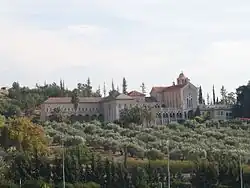
Cistercian monasteries have continued to spread, with many founded outside Europe in the 20th century. In particular, the number of Trappist monasteries throughout the world has more than doubled over the past 60 years: from 82 in 1940 to 127 in 1970, and 169 at the beginning of the 21st century.[32] In 1940, there were six Trappist monasteries in Asia and the Pacific, only one Trappist monastery in Africa, and none in Latin America.[32] Now there are 13 in Central and South America, 17 in Africa, and 23 in Asia and the Pacific.[32] In general, these communities are growing faster than those in other parts of the world.[32]
Over the same period, the total number of monks and nuns in the Order decreased by about 15%.[32] There are on average 25 members per community – less than half those in former times.[32] As of 1 January 2018, there were 1,796 Trappist monks[33] and 1,592 Trappistine nuns[34] across the world.
Institutional Structure
Cistercian communities are autonomous but united in a communion implemented by key institutions:
- Regular Visitation: An independent "Father Immediate" is appointed to help and support the abbot in the exercise of his pastoral charge and to foster concord in the community. The Father Immediate or other representative visits the monastery approximately every two years. The purpose of this “Regular Visitation” is to strengthen and supplement the pastoral action of the local superior, to correct violations where necessary, and to renew the nuns’ or monks’ spiritual fervor.
- General Chapter: The General Chapter is the supreme authority of the order. Since 2011, Abbots and Abbesses form a single General Chapter. They meet every 3 years for three weeks to strengthen the bonds of the order and to make key decisions, including the election of the Abbot General when necessary.[35] The Abbot General chairs the General Chapter.
Abbots General
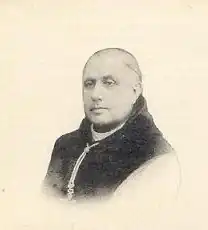
The Abbot General is elected for an unrestricted amount of time by the General Chapter. He is assisted by a Council that is composed of five members, four of them are elected by the General Chapter and the fifth is chosen by the elected Council members. The Abbot General and his Council reside in Rome and are generally in charge of the order's affairs.[36] The present Abbot General is Dom Bernardus Peeters of Koningshoeven Abbey in the Netherlands.[37]
- 1892–1904: Sébastien Wyart
- 1904–1922: Augustin Marre
- 1922–1929: Jean-Baptiste Ollitraut de Keryvallan
- 1929–1943: Herman-Joseph Smets
- 1943–1951: Dominique Nogues
- 1951–1963: Gabriel Sortais
- 1964–1974: Ignace Gillet
- 1974–1990: Ambroise Southey
- 1990–2008: Bernardo-Luis-José Oliveira
- 2008–2022: Eamon Fitzgerald
- 2022–present: Bernardus Peeters
List of Trappist monasteries and convents
As of 2018, there were 168 Trappist monasteries and convents.[38]
| Monks | Nuns |
|---|---|
| Africa | |
|
|
| Asia | |
|
|
| Europe | |
|
|
| Latin America | |
|
|
| North America | |
|
|
| Oceania | |
|
None |



















.svg.png)

.svg.png)











.svg.png)








.svg.png)

.svg.png)

See also
- Cistercian Martyrs of Atlas
- Enclosed religious orders
- Missionary Order of Mariannhill
References
- ^ Kinder, Terryl N. (19 Apr 2002). Cistercian Europe: Architecture of Contemplation. Wm. B. Eerdmans Publishing. pp. 50. ISBN 9780802838872.
... the Order of the Reformed Cistercians of Our Lady of La Trappe (today called the Cistercian Order of the Strict Observance [O.C.S.O.], popularly known as the Trappists and Trappistines) was founded in 1892.
- ^
 Obrecht, Edmond (1913). "Jean-Armand le Bouthillier de Rancé". In Herbermann, Charles (ed.). Catholic Encyclopedia. New York: Robert Appleton Company. Retrieved 2 June 2019.
- ^ M. Basil Pennington, OCSO. "The Cistercians: An Introductory History". The Order of Saint Benedict. Archived from the original on 2010-04-07. Retrieved 2008-01-01.
- ^ Chisholm 1911.
- ^ a b c Obrecht, Edmond (1913). "Trappists". In Herbermann, Charles (ed.). Catholic Encyclopedia. New York: Robert Appleton Company. Retrieved 2 June 2019.
- ^ OCist.Hu - A Ciszterci Rend Zirci Apátsága (2002-12-31). "History". OCist.Hu. Archived from the original on 2020-06-24. Retrieved 2011-03-09.
- ^ Denny-Dimitriou, Julia (Nov 23, 2010). "How one monk changed the South African landscape". OSV Newsweekly. Archived from the original on February 20, 2019. Retrieved June 26, 2016.
- ^ "FAQ's : Order of Cistercians of the Strict Observance: OCSO". ocso.org. Archived from the original on 2024-05-11. Retrieved 2024-05-23.
- ^ "OSB. Rule of Benedict : Text, English, Jan May Sep 3/3". Osb.org. 2006-05-06. Archived from the original on 2011-05-24. Retrieved 2011-03-09.
- ^ Rule of St. Benedict, c. 38: Reading must not be wanting at the table of the brethren when they are eating. The 1949 Edition Translated by Rev. Boniface Verheyen, OSB.
- ^ Jennifer Horsman; Jaime Flowers (2006), Please Don't Eat the Animals, Quill Driver Books, p. 10, ISBN 9781884956607.
- ^ Anthony Marett-Crosby, ed. (2003), The Benedictine Handbook, Hymns Ancient and Modern Ltd, p. 331, ISBN 9781853114991.
- ^ a b Can I maintain my own dietary discipline as a Trappist?, Order of Cistercians of the Strict Observance, archived from the original on 2016-11-04, retrieved 2016-05-13
- ^ "A Newcomer's Guide to the Trappists | Becoming a Trappist Monk or Nun". www.trappists.org. Archived from the original on 2017-06-26. Retrieved 2017-06-19.
- ^ "The Farm". Our Lady of Calvary Abbey. Archived from the original on September 12, 2022. Retrieved September 12, 2022.
- ^ "Our Daily Life - Trappist Monastery, Moncks Corner, South Carolina". Mepkin Abbey. Retrieved 2022-12-08.
- ^ "Daily Schedule – New Melleray". Retrieved 2022-12-08.
- ^ Becoming a monk or nun, Ordo Cisterciensis Strictioris Observantiae, archived from the original on 2016-05-21, retrieved 2016-04-28.
- ^ "The Rule of St. Benedict". Ccel.org. Archived from the original on 2007-01-03. Retrieved 2011-03-09.
- ^ "Work – New Melleray". Archived from the original on 2022-12-08. Retrieved 2022-12-08.
- ^ "The Best Beer in the World". 99% Invisible. Archived from the original on 20 August 2013. Retrieved 8 October 2015.
- ^ Bryce Eddings. "What are Trappist beers?". About.com Food. Archived from the original on 6 September 2015. Retrieved 8 October 2015.
- ^ "TRAPPIST - THE SEVEN MAGNIFICENT BEERS". BelgianShop Online. Archived from the original on 5 March 2016. Retrieved 8 October 2015.
- ^ "Michael Jackson's Beer Hunter - Chastity, poverty and a pint". Beerhunter.com. Archived from the original on 2022-05-26. Retrieved 2011-03-09.
- ^ "1904". newsaints.faithweb.com. Retrieved 2025-03-28.
- ^ "China (4)". newsaints.faithweb.com. Retrieved 2025-03-28.
- ^ "China (5)". newsaints.faithweb.com. Retrieved 2025-03-28.
- ^ "1986". newsaints.faithweb.com. Retrieved 2025-03-28.
- ^ "1988". newsaints.faithweb.com. Retrieved 2025-03-28.
- ^ "2002". newsaints.faithweb.com. Retrieved 2025-03-28.
- ^ "2019". newsaints.faithweb.com. Retrieved 2025-03-28.
- ^ a b c d e f "Cistercian Order of the Strict Observance (Trappists): Frequently Asked Questions". Ocso.org. 2003-12-08. Archived from the original on September 17, 2009. Retrieved 2010-01-18.
- ^ STATISTIQUES Moines - Monks - Monjes (PDF). ocso.org (Report). Order of Cistercians of Strict Observance. 1 January 2018. Retrieved 12 October 2018.
- ^ STATISTIQUES Moniales - Nuns - Monjas (PDF). ocso.org (Report). Order of Cistercians of Strict Observance. 1 January 2018. Retrieved 12 October 2018.
- ^ "Our Structure : Ordre Cistercien de la Stricte Observance: OCSO". ocso.org. Archived from the original on 2022-12-08. Retrieved 2022-12-08.
- ^ "Abbey of Our Lady of the Holy Trinity: Brief History". Holytrinityabbey.org. Archived from the original on 2010-02-25. Retrieved 2010-01-18.
- ^ "Dom Bernardus Peeters elected Abbot General". monks.org. 10 March 2022. Archived from the original on 2023-10-22. Retrieved 2022-06-16.
- ^ "Alphabetical List : Order of Cistercians of the Strict Observance : OCSO". ocso.org. Order of Cistercians of the Strict Observance. Archived from the original on 13 October 2018. Retrieved 13 October 2018.
- ^ Olivera, Bernardo (21 May 2006). "Tibhirine Today". tibhirine monastery today. Rome: Order of Cistercians of Strict Observance. Archived from the original on 25 July 2023. Retrieved 25 July 2023.
- ^ Alan Hope (23 January 2021). "The world is one Trappist beer poorer as abbey loses last monk". The Brussels Times. Archived from the original on 28 September 2023. Retrieved 28 September 2023.
- ^ a b Hiltner, Stephen (17 March 2018). "The World Is Changing. This Trappist Abbey Isn't. Can It Last?". The New York Times. Archived from the original on 18 March 2018. Retrieved 18 March 2018.
- ^ RadioWest (3 October 2017). "To Close A Monastery". Archived from the original on 18 March 2018. Retrieved 18 March 2018 – via Vimeo.
Works cited
- This article incorporates text from a publication now in the public domain: Chisholm, Hugh, ed. (1911). "Rancé, Armand Jean le Bouthillier de". Encyclopædia Britannica. Vol. 22 (11th ed.). Cambridge University Press. p. 885.
External links



Catholic religious institutes | ||
|---|---|---|
| Male and female |
|  |
| Male |
| |
| Female |
| |
| ||
