January 28 – St. Louis Cardinals owner Fred Saigh pleads no contest to two charges of income tax evasion in a U.S. federal court, and is sentenced to 15 months in prison. The penalty forces Saigh to put the Cardinals up for sale, and triggers fears that an out-of-town buyer could move the franchise out of St. Louis.[1]
February 13 – The Philadelphia Athletics' home field, known as Shibe Park since its 1909 opening, is renamed Connie Mack Stadium in honor of the team's 90-year-old, legendary and longtime (1901–1950) former manager.
February 16:
Future Baseball Hall of Fame hitter Ted Williams, flying combat missions as a U.S. Marine Corps pilot during the Korean War, survives the crash-landing of his F9F Panther fighter jet at Suwon airfield after it is hobbled by enemy anti-aircraft fire. The jet is "trailing smoke and a 30-foot ribbon of fire" as Williams brings it in on its belly; he escapes with minor injuries.[2]
February 20 – Brewing giant Anheuser-Busch and its president, August A. Busch Jr., purchase the St. Louis Cardinals franchise from Fred Saigh for $3.75 million, removing all concerns that the team will move elsewhere. Rumors had abounded that a group from Houston were bidding on the club with the intention of transferring it to that Texas city.[1] The Busch ownership will last until the start of 1996, and witness six NL pennants and three World Series championships.
March
March 13 – Boston Braves owner Lou Perini announces he is moving the team to Milwaukee, site of the Braves' top farm club, in time for the 1953 season. The move ends the club's presence in Boston after 82 consecutive years, predating the formation of the National League, of which it is a charter member; it began in 1871 as a member of the old National Association of Professional Base Ball Players. The franchise transfer is the NL's first of the 20th century, and MLB's first since 1903—but nine more will follow over the next two decades.
March 19 – The Pittsburgh Pirates sign twin brothers Eddie and Johnny O'Brien, 22, former baseball and basketball stars at Seattle University, to bonus contracts as amateur free agents. The first twins to play on the same MLB team in 38 years, on June 7, they will start at shortstop and second base and become Pittsburgh's primary double-play combination for the 1953 season.
March 26 – The St. Louis Browns return minor-league southpaw Tommy Lasorda to the Brooklyn Dodgers' organization. Lasorda's contract had been sold to the Browns on a conditional basis on February 21.
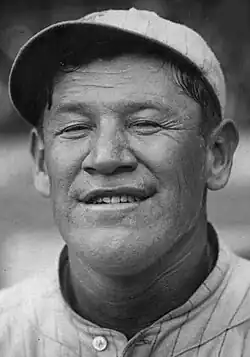
March 28 – Jim Thorpe, famed American Indian athlete considered by many as the greatest athlete in recorded history, dies in Lomita, California at the age of 64. A native of Prague, Oklahoma, Thorpe played six seasons of Major League Baseball between 1913 and 1919, mostly for the New York Giants, in addition to his Olympic gold medals in the 1912 pentathlon and decathlon competition, while playing and coaching for a long time in the National Football League.[3]
April
April 5 – Herb Gorman, 28-year-old left-fielder for San Diego of the Pacific Coast League, suffers severe chest pain after hitting his second double of the game. Rushed to a local hospital, Gorman dies en route from a heart attack.
The Cincinnati Reds announce they're changing their official name to the Cincinnati Redlegs. The name "Reds" dates to 1890 and is derived from the famous Cincinnati Red Stockings of 1869. But American troops are fighting Communism in Korea and the Cold War is escalating globally; as Cincinnati's general manager, Gabe Paul, notes later, "We wanted to be certain we weren't confused with the 'Russian Reds'."[4] The team's official identity will remain "Redlegs" until February 1959.
April 13 – In Cincinnati, over 30,000 see the Milwaukee Braves win their first game, 2–0, behind the pitching of Max Surkont.
April 15 – Triple-A baseball returns to Toledo with the relocation of the minor-league Milwaukee Brewers franchise that has been displaced by the MLB Braves. The Toledo Sox succeed the famous original Mud Hens, who moved to Charleston, West Virginia, on June 23, 1952. The T-Sox will win the regular-season American Associationpennant and lead the circuit in attendance.
April 29 – Joe Adcock of the Milwaukee Braves hits the first home run ever hit over the center field wall of the Polo Grounds. The shot, measured 475 feet, comes off Jim Hearn in the third inning of the Braves' 3–1 victory over the New York Giants.
April 30 – The Little-Bigger League changes its name to the Babe Ruth League.
May
May 6 – At Sportsman's Park, Bobo Holloman of the St. Louis Brownsno-hits the Philadelphia Athletics, 6–0, in his very first Major League start. (He had pitched five previous games in relief.) Holloman walks five and strikes out three in the majors' only no-hit game of the season.[6][5] He will only post two more victories in his MLB career, with his final appearance coming on July 19 of this season.
May 27 – The Detroit Tigers and Chicago White Sox battle 15 innings at Comiskey Park, but can't break a 2–2 deadlock. Each team has 12 hits. The game, halted by a 1 a.m. curfew, will be replayed in full at a later date.
May 31 – At Ebbets Field, the Brooklyn Dodgers sweep a Sunday doubleheader from the last-place Pittsburgh Pirates, 4–3 and 4–1, to stretch their winning streak to ten. At 27–14, they lead the surprising, second-place Milwaukee Braves (25–13) by half a game.
June
June 3 – Congress cites the research of New York City librarian Robert Henderson in proving that Alexander Cartwright "founded" baseball and not Abner Doubleday. His 1947 book Bat, Ball and Bishop documents Cartwright's contributions to the origins of the game of the baseball.[8]
June 18 – In a 23–3 thrashing of the Detroit Tigers at Fenway Park, the Boston Red Sox set a still-standing Major League record by scoring 17 runs in one inning. After scoring twice in the sixth to break a 3–3 tie, the Red Sox go on their record-breaking run-scoring output in the seventh. Eleven Boston players score in the inning, with Sammy White scoring three times and Gene Stephens (who also collects three hits in the inning, becoming the first Major Leaguer in modern history to do so), Tom Umphlett, Dick Gernert and winning pitcher Ellis Kinder scoring twice.
June 19 – In perhaps the brightest moment of their so-far dismal season, the 15–43 Tigers sign 18-year-old "bonus baby" Al Kaline one day after he graduates from Baltimore's Southern High School.
July 22 – The Detroit Tigers release four-time 20-game-winner, two-time AL MVP, 6x All-Star and future Hall-of-Famer Hal Newhouser. The 32-year-old left-hander, who posted a 200–148 record and a 3.07 ERA over his 15 years as a Tiger, will make a comeback in 1954 as a relief specialist for the Cleveland Indians.
July 29 – Billy Pierce of the Chicago White Sox surrenders a two-out, two-run, ninth-inning homer to George Kell of the Boston Red Sox before nailing down the final out of an 8–3 victory at Fenway Park. Pierce will not allow another run until the sixth inning of an August 19 game against the St. Louis Browns. His streak of 40 consecutive scoreless innings pitched is 1953's longest; it includes three complete-game shutouts and 72⁄3 frames of spotless relief.[5]
August 1 – Milwaukee Braves left-hander Warren Spahn throws a one-hitter to defeat the visiting Philadelphia Phillies, 5–0. He walks none, strikes out eight and faces 28 hitters, one over the minimum. Fellow future Hall-of-FamerRichie Ashburn reaches him for a single in the fourth inning for the only blemish on an otherwise perfect outing.[10] It is Spahn's second and last career one-hitter, although he'll fire no-hitters in both 1960 and 1961. Coincidentally, Spahn's near-perfecto turns the tables on the Phillies, whose lefty Curt Simmons has put up a similar outing on May 16 against the Braves at Milwaukee County Stadium.[5]
August 2 – Over fifty Los Angeles police are dispatched to Gilmore Field to quell an on-field brawl between the city's two Pacific Coast League teams, the minor-league Angels and the Hollywood Stars. The melee between the bitter rivals, engaged in a beanball war, is the third within three days, and lasts for a full half-hour. Los Angeles police chief William Parker is watching the game on television from his home when the slugfest breaks out, and he orders his men to Hollywood's home stadium to restore order. No arrests are made, but Parker warns both sides that further violence will result in "disturbing the peace" charges.
August 5 – Rookie Don Larsen of the St. Louis Browns pitches a complete game but drops a 5–0 decision to the Boston Red Sox at Fenway Park. However, he goes three for three at the plate to set a consecutive-hits record for pitchers with seven. Over the course of Larsen's 14-season career, he will prove to be one of MLB's best-hitting hurlers, batting .242 with 144 hits (including 25 doubles, five triples and 14 home runs) and 72 RBI in 596 at bats.
August 6 – Ted Williams' name appears in an MLB box score for the first time since April 30, 1952, days before he began his active Korean War service as a United States Marine Corps pilot. The Boston Red Sox legend flew 37 combat missions during his tour of duty, and survived a crash-landing when his plane was hit by enemy fire in February. Today, Williams pinch hits for Tom Umphlett in the ninth inning of a 7–7 tie against the St. Louis Browns at Fenway Park. He pops out to first base, but after six more appearances as an emergency batsman, he returns to his familiar post in left field and resumes his lusty hitting. By season's end, he gets into 37 games (26 of them as starting left fielder), and smashes 37 hits, including 13 home runs, in 91 at bats, for a batting average of .407 and an OPS of 1.410.
August 8 – The New York Yankees deal a double setback to their closest pennant pursuer, the Chicago White Sox, by shutting them out in both ends of a doubleheader at Yankee Stadium, 1–0 (behind Whitey Ford) and 3–0 (behind Bob Kuzava). In the second game, Kuzava throws a one-hitter, allowing only a double to Bob Boyd in the second inning. The double defeat drops the White Sox to eight games out of first place.
August 30 – In Game 1 of a doubleheader, Jim Pendleton slugs three home runs, as the Milwaukee Braves rout the Pittsburgh Pirates at Forbes Field, 19–4. The Braves tie the major league record for most home runs in a single game with eight, held by the New York Yankees since 1939. Pendleton becomes only the second rookie in history to hit three home runs in one game, joining teammate Eddie Mathews, who accomplished the feat just a year earlier.[11] In the second game of the twin bill, the Braves hit four more long balls and crush Pittsburgh again, 11–5. Mathews belts three dingers on the day, giving him a National League-leading 43. He will finish the season with 47 home runs, 30 of them on the road—also a major league record.[12] Only the Yankees have ever hit more home runs in consecutive games, or in a doubleheader: on June 28, 1939, against the Philadelphia Athletics at Shibe Park, they belted eight home runs in a 23–2 victory in the first game of a twin bill, then five more in a 10–0 win in the nightcap.[13][14]
September
September 1 – The last month of MLB's regular season holds little promise of pennant races. The Brooklyn Dodgers, having gone 48–14 (.774) in July and August, have built a 10½-game lead over the Milwaukee Braves in the National League; meanwhile, the New York Yankees remain comfortably in front of the Chicago White Sox (8½ lengths) in the American League with 22 games left to play.
September 2 – The St. Louis Cardinals overcome a three-run inside-the-park home run by shortstop Ted Kazanski to beat the Philadelphia Phillies‚ 10–7. Rip Repulski hits his 20th home run of the season for St. Louis‚ breaking the team's rookie record set by Johnny Mize in 1936. The Cardinals hammer 10 hits off Phillies starter Robin Roberts to hand him his 12th loss.
September 5 – Dick Kokos' 12th-inning home run settles matters as the St. Louis Browns defeat the Detroit Tigers, 1–0 in St. Louis. The Browns' Bob Turley fans 14 and gains the shutout win, while veteran Ralph Branca, who went 11 scoreless innings for Detroit, absorbs the hard-luck defeat.
September 6 – At the Polo Grounds, Brooklyn Dodgers right-fielder Carl Furillo's rage at being the target of brushback pitches from New York Giants hurlers finally boils over when he's plunked on the right wrist by a Rubén Gómez offering. After he takes first base, Furillo charges the Giants' nearby dugout. His target: New York manager Leo Durocher, 48. Punches are thrown and Furillo, 31, reportedly grabs Durocher by the throat before peacemakers separate them.[15] The two combatants are thrown out of the game, ultimately, a 6–3 Dodger win. It's Furillo's only career ejection. He also suffers a fractured left hand in the fracas, sidelining him until the 1953 World Series, in which he will bat .333 with eight hits.
September 12 – Carl Erskine defeats the second-place Milwaukee Braves 5–2, as the Brooklyn Dodgers clinch the pennant earlier than any other team in history. Brooklyn (98–44) leads Milwaukee by 13 games with 12 to play.
September 14 – The New York Yankees clinch their fifth straight pennant with an 8–5 win over the Cleveland Indians. Second baseman Billy Martin has four RBIs. The Yankees and Dodgers will meet in the 1953 World Series for the second straight year and the fourth time in seven years.
September 16 – Hall-of-Fame former second baseman Rogers Hornsby resigns as manager of the sixth place, 64–82 Cincinnati Redlegs. Hornsby, whose .358 lifetime batting average is contemporaneously ranked as second only to Ty Cobb's .367, wraps up a 14-year MLB managerial career with a won–lost mark of 701–812–17 (.463). After coach Buster Mills finishes Cincinnati's season as interim manager, the Redlegs will hire former American League catcher Birdie Tebbetts as their pilot for 1954.
September 20 – The Milwaukee Braves split a double-header with the Redlegs at County Stadium in their final home date of 1953. They draw 36,011 fans, setting a new National League attendance record (1,826,397) which they will promptly shatter in 1954 by drawing over 2.1 million spectators. On and off the field, 1953 is a spectacular first season in Wisconsin for the Braves, who improve from seventh to second place and signal their arrival as a contending team for the rest of the 1950s.
Al Rosen of the Cleveland Indians, who leads the American League in home runs (43) and runs batted in (145), is chasing the Triple Crown as he battles Mickey Vernon of the Washington Senators for the batting title. Rosen is batting .3361 entering his final at bat in the ninth inning; a hit will lift his average to .3372, one ten-thousandth of a point higher than Vernon's .3371, and earn him the crown. But he bounces out to third base, to finish the season at .3356.
Only 3,174 are on hand as the St. Louis Browns play their final home game at Sportsman's Park. The Brownies fall to the Chicago White Sox' Billy Pierce 2–1 in 11 innings. In their 52nd and last season in St. Louis, the American Leaguers attract only 297,238 fans.
October 5 – The Yankees win their record-setting fifth consecutive World Series championship and sixteenth overall, defeating the visiting Dodgers, 4–3, in Game 6 of the 1953 Fall Classic, to prevail, four games to two. Billy Martin is the star with a record-setting 12 hits, including the game-winning single in the bottom of the ninth of today's clincher.[18]
October 7 – Bill Veeck, facing dwindling attendance and revenue, is forced to sell the St. Louis Browns to a Baltimore-based group led by attorney Clarence Miles and brewer Jerry Hoffberger. The Browns will move to Baltimore and be known as the Orioles starting in the 1954 season.
October 8 – Jackie Robinson attempts to stage a barnstorming game in Birmingham, Alabama. However, city officials object to the team being integrated and bans Robinson from the city. It is only after Robinson agrees to release all the white players, that the city removes its objection and allows the team to play.[19]
October 10 – Hall-of-Fame second baseman and all-time Detroit Tiger great Charlie Gehringer steps down as the club's general manager after two difficult seasons. Farm system director Muddy Ruel, 57, succeeds him.[20] The rebuilding Tigers were 110–198 (.357) during Gehringer's GM tenure.
October 14 – Brooklyn Dodgers president Walter O'Malley tells the press that "the Dodgers will have a new manager next year." The announcement reveals that incumbent skipper Chuck Dressen, coming off 105 victories and a second-straight National League pennant in 1953, has demanded a three-year contract to return for 1954; O'Malley's policy is to limit his managers' contract terms to one year only. Although O'Malley gives Dressen "a few more days" to reconsider his demand, on October 28 it is reported that Dressen will not return to Brooklyn, instead signing a three-year pact to manage the Oakland Oaks of the Open-ClassificationPacific Coast League.[21] The defending NL champs begin their search for a new pilot.
October 28 – Legendary Brooklyn Dodgers' play-by-play announcer Red Barber resigns and takes a job as broadcaster for the rival New York Yankees. Barber is upset that Dodger owner Walter O'Malley has refused to support him in his fee-negotiation dispute with Gillette, sponsor of the television coverage of the 1953 World Series.
November 9 – Reaffirming its earlier position, the United States Supreme Court rules, 7–2, that baseball is a sport and not a business and therefore not subject to antitrust laws. The ruling is made in a case involving New York Yankees minor league player George Toolson, who refused to move from Triple-A to Double-A.
November 10 – The New York Giants end their tour of Japan. It is reported that each Giants player received just $331 of the $3,000 they were promised.
November 14 – Jimmy Dykes becomes the first manager of the reborn Baltimore Orioles, ten days after his release from the same position with the Philadelphia Athletics. In October, Arthur Ehlers, former Philadelphia general manager, made the same switch to Baltimore. The Orioles are the transplanted St. Louis Browns, set to rejoin the American League after a 52-year absence in 1954. On November 11, Ehlers had fired Marty Marion, the Browns' manager whom he and the Orioles have inherited.
November 24 – After what The New York Times calls a month-long "guessing game," the Brooklyn Dodgers sign Walter Alston, 42, a veteran minor-league manager, to a one-year pact to lead their team on the field in 1954. Although he has fashioned an outstanding record in Brooklyn's farm system, most recently with the Triple-ASt. Paul Saints and Montreal Royals, Alston is so obscure a choice compared to well-known figures such as Pee Wee Reese, Bill Terry and Frank Frisch—all objects of press speculation[23]—that some New York newspapers bear the headline "Wally Who?" But Alston will manage the Brooklyn/Los Angeles Dodgers over the next 23 seasons (all on one-year contracts), winning 2,040 games, seven NL pennants, four World Series championships, and a berth in the Baseball Hall of Fame.
January 9 – Pat Carney, 76, pitcher who played from 1901 through 1904 for the Boston Beaneaters of the National League.
January 11 – Doc Moskiman, 73, first baseman and right fielder for the Boston Red Sox in its 1910 season, who also spent parts of 13 seasons playing minor-league and independent-league ball, pitching more often than not and obtaining considerably good results.[24]
José Rodríguez, 58, Cuban Baseball Hall of Fame infielder whose 18-year career in professional baseball included a stint with the New York Giants of the National League from 1917 to 1918.
January 24 – Ben Taylor, 64, National Baseball Hall of Fame player, manager, coach and umpire, who played for 24 different teams in Negro League Baseball between 1908 and 1941, being considered the best first baseman in black baseball prior to the arrival of Buck Leonard and one of the most productive players offensively, while collecting a .334 lifetime batting average and hitting over .300 in fifteen of his first sixteen years in baseball.[25][26]
January 27 – Merv Shea, 52, catcher who played in 439 games for seven teams in a span of 11 seasons from 1927 to 1944; also coached for the Detroit Tigers, Philadelphia Phillies and Chicago Cubs during the 1940s.
March 3 – Clyde Milan, 65, speedy outfielder and solid line drive hitter who batted .285 for the Washington Senators over the course of 16 seasons from 1907 to 1922, collecting 2,100 hits, 1,004 runs and 495 stolen bases, and leading the American League by stealing 88 bases in 1912 and 75 in 1913, while setting a modern-rules MLB season record for steals in 1912, a mark surpassed three years later by Ty Cobb;[27] player-manager of 1922 Senators and member of Washington coaching staff for 17 seasons (1928–1929 and 1938 until his death).
Jock Menefee, 85, pitcher for the Pittsburgh Pirates, Louisville Colonels, New York Giants, Chicago Orphans and Chicago Cubs in a span of nine seasons from 1892 to 1903, who gained notoriety with the Cubs on July 15, 1902, when he became the first pitcher in National League history to pull off a successful steal of home, a feat which he accomplished against the Brooklyn Superbas on July 15, 1902,[28] and later on August 8, 1903, for start and win both games of a doubleheader against Brooklyn,[28] as he finished his career starting both games of a doubleheader for the third time of the season, against Pittsburgh on September 7, but did not get a decision in either contest.[29]
March 28 – Jim Thorpe, 65, Native American and one of the greatest all-around athlete in the first half of the 20th century, who in addition to playing in MLB for six seasons between 1913 and 1919,[32] won gold medals in the 1912 Summer Olympics in pentathlon and decathlon,[32] played in the NFL for eight seasons between 1920 and 1928,[32]barnstormed as a basketball player with a team composed entirely of American Indians, playing professional sports before retiring in 1928 at age 41,[32] and later appeared in several films as an actor[33] while being portrayed by Burt Lancaster in the 1951 biopic Jim Thorpe – All-American.
March 30 – Alva Bradley, 69, principal owner of the Cleveland Indians from 1927 until he sold the franchise to Bill Veeck in 1946.
Herb Gorman, 28, outfielder/first baseman who made a pinch-hit appearance for the 1952 St. Louis Cardinals; suffered a fatal heart attack while playing in a Pacific Coast League game.
April 11
Kid Nichols, Hall of Famepitcher who posted 361 victories for the seventh most wins in Major League Baseball history, died in Kansas City, Missouri at the age of 79. Born in Madison, Wisconsin, Nichols anchored the pitching staff of the Boston Beaneaters between 1890 and 1901, guiding Boston to five National League championships in his first nine seasons with the club. He surpassed the 30-victory plateau seven times from 1891 to 1894 and 1896–1898, as his career record shows that he hurled 20 or more wins in ten consecutive seasons from 1891 to 1994 and in 1904.[34] In addition, he remains as the youngest pitcher to reach the illustrious 300-win milestone, getting there months before his 31st birthday. His most productive season came in 1892, when he had a 35–16 record and won two games in the league's Championship Series as the Beaneaters defeated Cy Young and the Cleveland Spiders.[35] Nichols remained with Boston through 1901, when the team let him go in an effort to save money.[36] After a two-year lapse, he returned to the majors as manager and pitcher for the St. Louis Cardinals from 1904 to 1905 and ended his career with the Philadelphia Phillies in 1905.[34] Overall, Nichols posted a 2.96 ERA, led the National league in wins for three straight years from 1896 to 1898, pitched more than 300 innings in every season but three and more than 400 five times while pitching 532 complete games and 48 shutouts in 562 starts,[34] and was never removed from a game for a relief hurler.[37] Besides, his record of seven seasons with 30 or more victories is a mark that is likely to stand forever, since the implementation of five-man rotations, pitch count and inning limits in modern baseball.[36]
Bruce Wetmore, 77, Canadian-born Boston businessman and associate of Charles F. Adams who was a co-owner of the Braves from 1927 through 1935.
April 14 – Roy Patterson, 77, Chicago White Sox pitcher best remembered for throwing the first pitch and recording the first win in the first official American League game on April 24, 1901, defeating the Cleveland Blues at Chicago's South Side Park, 8–2, while collecting an 81–72 career record and 2.75 ERA for Chicago in seven seasons from 1901 to 1907, including AL pennants in 1901 and 1906, though he did not pitch for the 1906 World Series champion White Sox team.[38]
April 16 – Sam Gray, 55, pitcher in 379 games for the Philadelphia Athletics and St. Louis Browns over ten seasons from 1924 to 1933; won 20 games for 1928 Browns, then lost 24 for them three years later; led American League in shutouts in 1929.
April 18
Harry Niles, 72, outfielder and second baseman who played from 1906 through 1910 for the St. Louis Browns, New York Highlanders, Boston Red Sox and Cleveland Naps.
Cotton Tierney, 59, second baseman and third baseman who played from 1920 to 1925 for the Pittsburgh Pirates, Philadelphia Phillies, Boston Braves and Brooklyn Dodgers, being honored by his great-great-nephew Jeff Euston, who created in 2005 a website named Cot's Baseball Contracts,[39] which track all salaries of MLB players, contracts, bonuses, service time and franchise values.
April 26 – Don Brennan, 49, pitcher who played for the New York Yankees, Cincinnati Reds and New York Giants in a span of five seasons from 1933 to 1937.
May 12 – Ed Summers, 68, pitcher for the Detroit Tigers over five seasons from 1908 to 1912, who posted a 24–12 record and 1.64 ERA in 301 innings of work in his rookie season, including two complete game victories over the Philadelphia Athletics in a doubleheader, finishing with a two-hit, 1–0 shutout in ten innings in the second game, becoming the only pitcher in major league history to throw two complete game victories and more than eighteen innings in both games of a doubleheader, a record that remain intact.[40]
May 19 – Sam Leever, 81, pitcher who spent his 13-year career with the Pittsburgh Pirates from 1898 to 1910, compiling a 194–100 record for a .660 W–L percentage, the ninth highest in MLB baseball history, leading the National League with a 2.06 ERA and seven shutouts in 1903 and in W-L% three times, while amassing 20 or more wins in four seasons.[41]
May 25 – Ray Grimes, 69, first baseman for the Boston Red Sox, Chicago Cubs and Philadelphia Phillies in a span of six seasons from 1921 to 1926, who posted a .329/.413/.480 line in 433 games and established a Major League season record with at least one run batted in over 17 consecutive games in 1922, a mark which still stands.[42]
May 27 – Jesse Burkett, Hall of Fame left fielder and three-time batting champion, died in Worcester, Massachusetts,[43] at the age of 84. Born on December 4, 1868, in Wheeling, West Virginia,[43] Burkett made his professional baseball debut in 1888 as a pitcher, winning 27 games for a minor league team in Pennsylvania.[44] The next year, he posted a 39–6 record for a team in his native Worcester[44] before surfacing in the National League in 1890 with the New York Giants, where he was turned into an outfielder.[43] Afterwards, he joined the Cleveland Spiders from 1891 to 1898. In 1899, Burkette was assigned to the St. Louis Perfectos/Cardinals. He won three National League batting titles from 1895 to 1901, surpassing the .400 mark twice,[45] hitting for the Spiders .405 and .410 in 1895 and 1896, respectively. In 1901, Burkett captured his third batting title with a .376 mark for the Cardinals, before finishing his 16-year career in the American League. Burkett jumped to the St. Louis Browns in 1902, playing for them three years before ending his career with the 1905 Boston Americans, who later became the Red Sox. Overall, Burkett compiled a lifetime batting average of .338 on the strength of 2,850 hits in 2,607 games, including a .415 on-base percentage, 320 doubles and 1,720 runs scored, while sharing with Rogers Hornsby and Ty Cobb the record of hitting .400 or better the most times.[45] He also earned a 1916 World Series ring as a coach for his former Giants team.[44]
June
June 7 – Bill Burns, 73, left handed pitcher for five Major League Baseball teams in five seasons from 1908 to 1912, who infamously returned to the majors as one of the conspirators in the famous Black Sox Scandal.[46]
September 3 – Jack Pfiester, 75, pitcher for the Pittsburgh Pirates and Chicago Cubs over eight seasons between 1903 and 1911, who won two World Series with the Cubs in 1907–1908, led the National League with a 1.15 earned run average in 1907, winning 20 games in 1906 and posting a career record of 71–44, whose lifetime 2.02 ERA is the third best of all-time for MLB pitchers with at least 1,000 innings of work.[48]
September 4
Buck Herzog, 68, versatile infielder who played from 1908 through 1920 with four National League teams and also managed the Cincinnati Reds from 1914 to 1916, winning four NL pennants, while collecting 12 hits in the 1912 World Series to set a series record since then tied and broken.[49]
Roy Van Graflan, 59, American League umpire from 1927 to 1933 who worked 1,034 AL games and two World Series; one of only six umpires who ever ejected Lou Gehrig from a game (July 1, 1929).
October 17 – Jim Delahanty, 74, one of five Delahanty brothers to play in the majors, a fine defensive second baseman who had a 13-year career with eight teams spanning 1901–1915, while batting a solid .283/.357/.373/.730 line and 1,159 hits in 1,186 career games.
November 6 – Tom Dougherty, 72, pitcher who made one-game relief appearance for the Chicago White Sox in 1904, who is probably unique in Major League Baseball history for his perfect 1–0 winning record in a game where he faced the minimum six batters over two innings, without giving up a run, hit or walk in his immaculate work.[50]
December 15 – Ed Barrow, 85, Hall of Fame executive and notable judge of talent, who discovered Honus Wagner in 1896 and later converted Babe Ruth from pitcher to outfielder, also signing contracts with Lou Gehrig, Joe DiMaggio, Lefty Gomez, Tony Lazzeri and Red Ruffing; as business/general manager and club president, oversaw the New York Yankees' dynasty that captured 14 American League pennants and ten World Series championships from 1921 to 1944, including five Series sweeps; earlier, served as field manager of 1903–1904 Detroit Tigers and 1918–1920 Boston Red Sox, leading 1918 Bosox to world championship[52]
December 17
Walt Devoy, 68, multi-sport athlete who played right field for the 1903 St. Louis Browns, playing also in the St. Louis Soccer League, where he later was an executive for the Ben Millers FC.
December 24 – Pinch Thomas, 65, backup catcher whose nickname reflects his pinch-hitting abilities, as he posted a batting average of .419 (13-for-31) for the Boston Red Sox and Cleveland Indians from 1912 to 1921, while earning four World Series titles with Boston (1912; 1915–16) and Cleveland (1920).[53]
December 25 – Patsy Donovan, 88, Irish-American right fielder and manager who played for several teams over 17 years spanning 1890–1907, while managing five teams in 11 seasons from 1897 to 1911, collecting a .301 batting career average of .301 with 2,253 hits and 518 stolen bases, and a managerial record of 684–879 (.438).[54]