724
| Years |
|---|
| Millennium |
| 1st millennium |
| Centuries |
| Decades |
| Years |
| 724 by topic |
|---|
| Leaders |
|
| Categories |
|
| Gregorian calendar | 724 DCCXXIV |
| Ab urbe condita | 1477 |
| Armenian calendar | 173 ԹՎ ՃՀԳ |
| Assyrian calendar | 5474 |
| Balinese saka calendar | 645–646 |
| Bengali calendar | 130–131 |
| Berber calendar | 1674 |
| Buddhist calendar | 1268 |
| Burmese calendar | 86 |
| Byzantine calendar | 6232–6233 |
| Chinese calendar | 癸亥年 (Water Pig) 3421 or 3214 — to — 甲子年 (Wood Rat) 3422 or 3215 |
| Coptic calendar | 440–441 |
| Discordian calendar | 1890 |
| Ethiopian calendar | 716–717 |
| Hebrew calendar | 4484–4485 |
| Hindu calendars | |
| - Vikram Samvat | 780–781 |
| - Shaka Samvat | 645–646 |
| - Kali Yuga | 3824–3825 |
| Holocene calendar | 10724 |
| Iranian calendar | 102–103 |
| Islamic calendar | 105–106 |
| Japanese calendar | Yōrō 8 / Jinki 1 (神亀元年) |
| Javanese calendar | 617–618 |
| Julian calendar | 724 DCCXXIV |
| Korean calendar | 3057 |
| Minguo calendar | 1188 before ROC 民前1188年 |
| Nanakshahi calendar | −744 |
| Seleucid era | 1035/1036 AG |
| Thai solar calendar | 1266–1267 |
| Tibetan calendar | ཆུ་མོ་ཕག་ལོ་ (female Water-Boar) 850 or 469 or −303 — to — ཤིང་ཕོ་བྱི་བ་ལོ་ (male Wood-Rat) 851 or 470 or −302 |
Year 724 (DCCXXIV) was a leap year starting on Saturday of the Julian calendar, the 724th year of the Common Era (CE) and Anno Domini (AD)
Events
By date
- January 26 – (24 Sha'ban 105 AH) Hisham ibn Abd al-Malik, becomes the new Caliph of the Umayyad Caliphate, which covers most of the Middle East, North Africa and Spain, after his brother Yazid II dies of tuberculosis following a 4-year reign.[1] Hisham reigns for 19 years, during which he appoints Khalid al-Qasri as of Governor of Iraq[2]
- February – Al-Jarrah ibn Abdallah of the Umayyad Caliphate inflicts a crushing defeat on the Khazars of what is now Russia in a battle fought between the Cyrus and Araxes Rivers.[3]
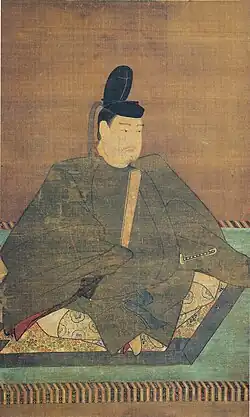
- March 3 – Empress Genshō abdicates the throne, in favor of her 23-year-old nephew, Prince Obito, who becomes the 45th monarch of Japan as the Emperor Shōmu. He is the son of the late Emperor Monmu.[4]
- March 6 – Muhammad ibn Abd al-Malik ibn Marwan, the son of the Caliph Abd al-Malik, is appointed as the Umayyad Governor of Egypt after Hanzala ibn Safwan al-Kalbi resigns. He serves for only two months.
- April – Athanasius III becomes the new Patriarch of the Syriac Orthodox Church, six months after the death of Elias I.[5]
- May 2 – Muhammand ibn Marwan resigns as Governor of Egypt after a difference of opinion on policy, and is replaced by Al-Hurr ibn Yusuf.[6]
- July 11 – Prince Æthelbert of the Kingdom of Kent issues a charter that is approved by his father, King Wihtred.[7]
- August 15 – China's Emperor Xuanzong deposes his wife, the Empress consort Wang.[8]
- December 29 – K'ak' Tiliw Chan Yopaat becomes king (ajaw) of the Maya city-state of Quiriguá, now in Guatemala), and serves for more than 60 years until his death in 785.
By place
Europe
- Ragenfrid, ex-mayor of the palace of Neustria, revolts against Charles Martel. He is easily defeated, and Ragenfrid gives up his sons as hostages, in return for being allowed to keep his lands in Anjou.[9]
- Cináed mac Írgalaig, also known as "the one-eyed", becomes High King of Ireland.[10]
Arabian Empire
- The Turgesh Khaganate scores a major victory over the Arabs, in the "Day of Thirst" near Khujand (modern Tajikistan).
- A Muslim fleet raids the Byzantine-ruled Balearic Islands, as well as Byzantine Sardinia and Lombard Corsica.[11]
By topic
Architecture
- Shōmu orders that houses of the Japanese nobility be roofed with green tiles, as in China, and have white walls with red roof poles (approximate date).
Religion
- Pirmin, Visigothic monk, is appointed abbot of Mittelzell Abbey at Reichenau Island, which he has founded.[12]
- Hugh of Champagne, grandson of Pepin of Herstal, is appointed bishop of Bayeux.
Births
- Dong Jin, Chinese official and general
- Fujiwara no Hamanari, Japanese noble and poet
Deaths
- January 26 – Yazid II, Muslim caliph (b. 687)
- Felix, archbishop of Ravenna
- Fogartach mac Néill, High King of Ireland
- Hababah, concubine singer of Caliph Yazid II.
- Rotrude of Treves, wife of Charles Martel
- Tonyukuk, military leader of the Göktürks (approximate date)
References
- ^ Lammens, Henri & Blankinship, Khalid Yahya (2002). "Yazīd (II) b. ʿAbd al-Malik". In Bearman, P. J.; Bianquis, Th.; Bosworth, C. E.; van Donzel, E. & Heinrichs, W. P. (eds.). The Encyclopaedia of Islam, Second Edition. Volume XI: W–Z. Leiden: E. J. Brill. p. 311. ISBN 978-90-04-12756-2.
- ^ .Khleifat, Awad Mohammad (May 1973). The Caliphate of Hishām b. ʿAbd al-Malik (105–125/724–743) with Special Reference to Internal Problems (PhD). University of London, School of Oriental and African Studies. pp. 53–54.
- ^ Brook, Kevin Alan (2006). The Jews of Khazaria (Second ed.). Plymouth: Rowman & Littlefield Publishers, Inc. p. 127. ISBN 978-0-7425-4982-1.
- ^ Ponsonby-Fane, Richard (1959). The Imperial House of Japan, p. 57
- ^ Harrak, Amir (1999). The Chronicle of Zuqnin, Parts III and IV A.D. 488–775. Toronto: Pontifical Institute of Mediaeval Studies. pp. 158–159. ISBN 9780888442864.
- ^ Abbott, Nabia (1965). "A New Papyrus and a Review of the Administration of ʿUbaid Allāh b. al-Ḥabḥāb". In Makdisi, George (ed.). Arabic and Islamic Studies in Honor of Hamilton A. R. Gibb. Leiden: E. J. Brill. p. 27.
- ^ Anglo-Saxons.net, "S1180"
- ^ Old Book of Tang, vol. 51.
- ^ David Nicolle (2008). Poitiers AD 732, Charles Martel turns the Islamic tide (p. 18). ISBN 978-184603-230-1
- ^ Fragmentary Annals of Ireland, FA 178
- ^ David Nicolle (2008). Poitiers AD 732, Charles Martel turns the Islamic tide (p. 41). ISBN 978-184603-230-1
- ^ Old, Hughes Oliphant (1998). The reading and preaching of the scriptures in the worship of the Christian church. Wm. Eerdmans, pp. 137–40. ISBN 978-0-8028-4619-8