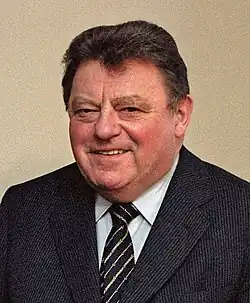
Franz Josef Strauss (German: Strauß[fʁantsˈjoːzɛfˈʃtʁaʊs]; 6 September 1915 – 3 October 1988) was a German politician. He was the long-time chairman of the Christian Social Union in Bavaria (CSU) from 1961 until 1988, member of the federal cabinet in different positions between 1953 and 1969 and minister-president of Bavaria from 1978 until 1988. Strauss is also credited as a co-founder of European aerospace conglomerate Airbus.
After the 1969 federal elections, West Germany's CDU/CSU alliance found itself out of power for the first time since the founding of the Federal Republic. At this time, Strauss became more identified with the regional politics of Bavaria. While he ran for the chancellorship as the candidate of the CDU/CSU in 1980, for the rest of his life Strauss never again held federal office. From 1978 until his death in 1988, he was the head of the Bavarian government. His last two decades were marked by a fierce rivalry with CDU chairman Helmut Kohl.[1]
Early life
Born in Munich on 6 September 1915, as the second child of a butcher,[2] Strauss studied German letters, history and economics at the Ludwig Maximilian University of Munich from 1935 to 1939. He was an active member of a Roman Catholic youth organization that clashed with the Nazi Party. Like most young men in Germany he was called up for military service when war began in 1939. Thanks to his university background he became an officer.[3]
World War II
In World War II, he served in the Wehrmacht on the Western and Eastern Fronts. While on furlough, he passed the German state exams to become a teacher. After suffering from severe frostbite on the Eastern Front in early 1943, he served as an Offizier für wehrgeistige Führung, responsible for the education of the troops, at the antiaircraft artillery school in Altenstadt Air Base, near Schongau. He held the rank of Oberleutnant at the end of the war.
Early post-war years
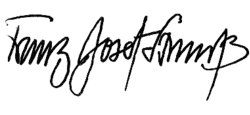
In 1945 he served as translator for the U.S. Army. He called himself Franz Strauß until soon after the war when he started using his middle name Josef as well.[4]
Political life 1945–1961
After the war, in 1945, he was appointed deputy Landrat (chief executive and representative of the district) of Schongau by the American military government and was involved in founding the local party organization of the Christian Social Union in Bavaria (CSU).[5] Strauss became a member of the first Bundestag (Federal Parliament) in 1949.
In 1953 Strauss became Federal Minister for Special Affairs in the second cabinet of ChancellorKonrad Adenauer, in 1955 Federal Minister of Nuclear Energy, and in 1956 Defence Minister, charged with the build-up of the new West German defence forces, the Bundeswehr – the youngest man to hold this office at the time. He became chairman of the CSU in 1961.
Strauss stated in a letter to HIAG in March 1957: "I think you know how I personally think about the front line units of the Waffen-SS. They are included in my admiration for the German soldiers of the last world war."[6]
Lockheed bribery scandals
Former Lockheed lobbyist Ernest Hauser admitted to investigators during a U.S. Senate hearing that Minister of Defence Strauss and his party had received at least $10 million in remuneration for arranging West Germany's purchase of 900 F-104G Starfighters in 1961, which later became part of the Lockheed bribery scandals. The party, its leaders, and Strauss all denied the allegations; and Strauss filed a slander suit against Hauser. Strauss and Hauser had met after World War II in Schongau, Bavaria, where Hauser was stationed. Hauser worked for U.S. Intelligence and Strauss was Hauser's translator. They were good friends, which Strauss later denied, in a denial belied by the fact that Strauss had attended Hauser's wedding. As the allegations were not corroborated, the issue was dropped.[7] It was known at the time that a Senate hearing in the U.S. revealed that Lockheed associates paid Strauss a bribe to purchase the planes, due to Boeing suing Lockheed over the lost German business. In a Senate hearing in the U.S., it was admitted by Lockheed associates that the funds were disbursed to Strauss. In spite of this fact, Strauss was never indicted in Germany due to his influence. Lockheed at that time was on the brink of collapse; the German contract was key to the company's survival. The F-104G's development had been expensive; the U.S. Air Force refused to purchase the plane due to its unnecessary features. The German contract proved to be a windfall for Lockheed. After Germany ordered the fighter planes from Lockheed, many more European governments started to place their trust in the Starfighter and ordered more planes, saving Lockheed from financial ruin.
Spiegel affair
Strauss was forced to step down as defence minister in 1962 in the wake of the Spiegel affair. Rudolf Augstein, owner and editor-in-chief of the influential Der Spiegel magazine, published German defense information that Strauss's department alleged was top secret. He was arrested on Strauss's request and was held for 103 days. On 19 November, the five FDP ministers of the cabinet resigned, demanding that Strauss be fired. This put Chancellor Adenauer himself at risk. He found himself publicly accused of backing the suppression of a critical press with the resources of the state. Strauss had no choice but to admit that he had lied to the parliament, and was forced to resign. Strauss himself was exonerated by the courts on the charge of acting against the constitution.[8]
Rivalry between Kohl and Strauss
F. J. Strauß, K. Schiller
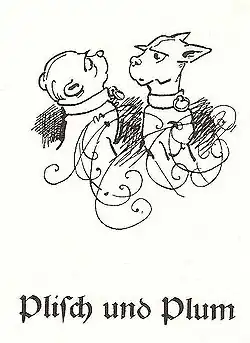
Strauss was appointed minister of the treasury again in 1966, in the cabinet of Kurt Georg Kiesinger. In cooperation with the SPD minister for economy, Karl Schiller, he developed a groundbreaking economic stability policy; the two ministers, quite unlike in physical appearance and political background, were popularly dubbed Plisch und Plum, after two dogs in a 19th-century cartoon by Wilhelm Busch.[9]
After the SPD was able to form a government without the conservatives, in 1969, Strauss became one of the most vocal critics of Willy Brandt's Ostpolitik. After Helmut Kohl's first run for chancellor in 1976 failed, Strauss cancelled the alliance between the CDU and CSU parties in the Bundestag, a decision which he reversed only months later when the CDU threatened to extend their party to Bavaria (where the CSU holds a political monopoly for the conservatives). In the 1980 federal election, the CDU/CSU opted to nominate Strauss as their candidate for chancellor. Strauss had continued to be critical of Kohl's leadership, so providing Strauss a shot at the chancellery may have been seen as an endorsement of either Strauss' policies or style (or both) over Kohl's. But many, if not most, observers at the time believed that the CDU had concluded that Helmut Schmidt's SPD was likely unbeatable in 1980, and felt that they had nothing to lose in running Strauss. Schmidt's victory was seen by Kohl's supporters as a vindication of their man, and though the rivalry between Kohl and Strauss persisted for years, once the CDU/CSU was able to take power in 1982, it was Kohl who became chancellor. He remained in power well beyond Strauss's death.
Strauss wrote a book called The Grand Design, in which he set forth his views of how the future unification of Europe might be achieved.[10][11] He was part of the secret paneuropean conservative network Le Cercle that promoted his political career.[12]
Airbus
As an aerospace enthusiast, Strauss was a key player in the creation of Airbus in the 1970s. He served as chairman of the company.[13] in the late 1980s, until his death in 1988; he saw the company win a lucrative but controversial (see Airbus affair) contract to supply planes to Air Canada just before his death. Munich's new airport, the Franz Josef Strauß Airport, was named after him in 1992.
Minister-President of Bavaria
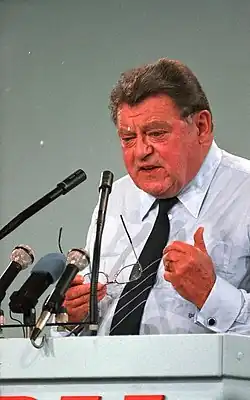
Strauss addressing the CDU in 1986, two years before his death
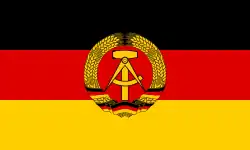
From 1978 until his death in 1988, Strauss was Minister-President of Bavaria, serving his rotation as president of the German Bundesrat in 1983–84. After his defeat in the 1980 federal election, he retreated to commenting on federal politics from Bavaria. Strauss admired the history of the defunct Bavarian monarchy, but did not want it restored. He became the most visible critic of Kohl's politics in his own political camp, even after Kohl ascended to the chancellorship. In 1983, Strauss was primarily responsible for a loan of 3 billion Deutsche Marks given to East Germany. This move, in violation of longtime CSU/CDU policy to allow the East German economy to collapse naturally, was widely criticised even during Strauss's lifetime. The Republicans split from the CSU/CDU over this move.[14]
Wackersdorf nuclear reprocessing plant (WAA)
Strauß campaigned vehemently for the construction of the Wackersdorf nuclear reprocessing plant (WAA) in Wackersdorf (Bavaria), which was accompanied by strong protests from the population, which he described as "hardly more dangerous than a bicycle spoke factory".[15]
The ecclesiastical resistance in particular, which met primarily at the Franziskus-Marterl, was a nuisance for Strauss and he said that "anyone who confuses people, whoever causes them to feel insecure, excited and afraid for no reason, is doing the work of the devil".[16][17]
Visit to Albania
Strauss visited communist Albania on 21 August 1984, while Enver Hoxha, the ruler from the end of World War II until his death in 1985, was still in power. Strauss was one of the few Western leaders, if not the only one, to visit the isolationist Albania in decades. This fuelled speculation that Strauss might be preparing the way for diplomatic links between Albania and West Germany and, indeed, relations were established in 1987.[18]
In 2017, Strauss was honored with the Albanian National Flag Order,[19] while a city square holds his name in Tirana.
Death
On 1 October 1988, Strauss collapsed while out hunting with Johannes, 11th Prince of Thurn and Taxis, in the Thurn and Taxis forests, east of Regensburg.[2] He died in a Regensburg hospital on 3 October without having regained consciousness. He was 73.[2]
Family
Strauss married Marianne Zwicknagl in 1957. She died in a car accident in 1984.[2] They had three children: Maximilan Josef, Franz Georg, and Monika, who was member of the Landtag of Bavaria and a Bavarian minister. In 2009 she was elected to the European Parliament.
Legacy
Strauss shaped post-war Bavaria and polarized the public like few others. He was an articulate leader of conservatives and a skilled rhetorician. His outspoken right-leaning political standpoints made him an opponent of more moderate politicians and the entire political left. His association with several large-scale scandals made many politicians distance themselves from him. His policies contributed to changing Bavaria from an agrarian state to one of Germany's leading industry centres, and one of the wealthiest regions of Germany.[1][20]
According to British diplomat Richard Hiscocks:
Strauss is without doubt one of the most remarkable personalities that has yet emerged in Germany since the war and, from a democratic point of view, the most dangerous…. he has great ambition and combines with it the advantages of considerable intellectual gifts, an exceptional memory, immense resilience and capacity for work, and the ability to make quick decisions....On the other hand, these positive qualities are offset by equally pronounced defects. The unscrupulousness of his political methods exceeds even Adenauer’s and is not counterbalanced, as with Adenauer, by good judgment and serenity of manner. Above all he is lacking in self-control and knowledge of men, and has the habit of picking weak and sycophantic companions....His quick decisions therefore have often been the wrong ones. Martin Walser once wrote of him, “He can defend us against everything, only not against himself.”[21]
Notes
^ abDavid Wilsford, ed. Political Leaders of Contemporary Western Europe: A Biographical Dictionary (Greenwood, 1995) pp. 432–40.
^NoteArchived 27 November 2017 at the Wayback Machine on the website of the President of Albania (in Albanian)
^James, Peter (1998). "Franz Josef Strauß-lasting legacy or transitory phenomenon?". German Politics. 7 (2): 202–210. doi:10.1080/09644009808404518.
^Richard Hiscock, The Adenauer era (1966) pp 241—242.
Further reading
Ahonen, Pertti. "Franz‐Josef Strauss and the German nuclear question, 1956–1962." The Journal of Strategic Studies 18#2 (1995): 25–51.
Ford, Graham. "Constructing a Regional Identity: The Christian Social Union and Bavaria's Common Heritage, 1949–1962." Contemporary European History 16#3 (2007): 277–297.
Kieninger, Stephan. "Freer movement in return for cash: Franz Josef Strauß, Alexander Schalck-Golodkowski, and the Milliardenkredit for the GDR, 1983–1984." in New Perspectives on the End of the Cold War (Routledge, 2018) pp. 117–137.
Horst Möller: Franz Josef Strauß. Herrscher und Rebell. Piper, München 2015, ISBN 978-3-492-05640-3.
Pridham, Geoffrey. "The European Policy of Franz Josef Strauss and its Implications for the Community." Journal of Common Market Studies (1980) 18#4 pp 313–332.
Ridley, Hugh. "The Spiegel Affair." in Law in West German Democracy (Brill, 2019) pp. 130–145.
Primary sources
Franz Josef Strauss. The Grand Design: A European Solution to German Reunification. English translation: London: Weidenfeld & Nicolson, 1965.
in German
Karl Rösch: Franz Josef Strauß. Bundestagsabgeordneter im Wahlkreis Weilheim 1949–1978, Utz, München 2014, ISBN 978-3-8316-4392-9.
Wilfried Scharnagl: Mein Strauß. Staatsmann und Freund. Ars Una, Neuried 2008, ISBN 978-3-89391-860-7.
Wilhelm Schlötterer: Macht und Missbrauch. Franz Josef Strauß und seine Nachfolger. Aufzeichnungen eines Ministerialbeamten. Fackelträger, Köln 2009, ISBN 978-3-7716-4434-5; (updated edition: Macht und Missbrauch. Von Strauß bis Seehofer, ein Insider packt aus. Aktualisierte Taschenbucherstausgabe, Heyne, München 2010, ISBN 978-3-453-60168-0).
Walter Schöll (ed): Franz Josef Strauss. Der Mensch und der Staatsmann. Ein Porträt. Schulz, Kempfenhausen am Starnberger See 1984, ISBN 3-7962-0152-0.
Thomas Schuler: Strauß. Die Biografie einer Familie. Scherz, Frankfurt am Main 2006, ISBN 3-502-15026-5.
Peter Siebenmorgen: Franz Josef Strauß, Ein Leben im Übermaß. Siedler, München 2015, ISBN 978-3-8275-0080-9.
Franz Georg Strauß: Mein Vater. Erinnerungen. Herbig, München 2008, ISBN 978-3-7766-2573-8.
Michael Stephan: "Franz Josef Strauß" in: Katharina Weigand (Hrsg.): Große Gestalten der bayerischen Geschichte. Utz, München 2011, ISBN 978-3-8316-0949-9.
Speaker:Theodor Heuss until 12 September 1949; Hermann Schäfer until 10 January 1951; August-Martin Euler until 6 May 1952; Hermann Schäfer from 6 May 1952
Members:
Atzenroth
Becker
Blank
Blücher
Dannemann
Dehler
Dirscherl
Eberhard (from 3 October 1952)
Euler
Fassbender
Friedrich (from 5 October 1950 Non-attached, from 16 November 1950 BHE/DG, from 2 April 1952 FDP-Gast)
Langer (from 10 June 1952 Non-attached, from 29 March 1953 WAV)
Leuchtgens (from 21 January 1950 DRP, from 5 October 1950 Non-attached (DRP), from 6 December 1950 DP, from 27 July 1953 partei- und Non-attached)
Leuze (from 21 March 1952)
Linnert (until 27 October 1949)
Luchtenberg (from 30 October 1950)
Margulies
Mauk (from 7 April 1952)
Mayer (until 18 December 1952)
Mende
Middelhauve (until 17 October 1950)
Mulert (from 1 February 1952)
Neumayer
Nöll
Nowack (until 30 September 1952)
Oellers (until 5 June 1951)
Onnen
Pfleiderer
Preiß
Preusker
Rademacher
Rath
Rechenberg (until 19 January 1953)
Reif
Revenstorff
Rüdiger (until 20 February 1951)
Schäfer
Schneider
Stahl
Stegner
Trischler
Vries (from 5 January 1953)
Wellhausen
Wildermuth (until 9 March 1952)
Will (from 1 February 1952)
Wirths
Zawadil (from 26 November 1952 DP)
DP
DP
Speaker: Heinrich Hellwege until 2 November 1949; Friedrich Klinge until 21 December 1949; Hans Mühlenfeld until 15 March 1953; Hans-Joachim von Merkatz from 17 March 1953
Members:
Ahrens
Bahlburg (from 13 September 1951 Non-attached, from 24 January 1952 DP-Gast, from 10 September 1952 Non-attached)
Campe (from 23 January 1950, until 8 January 1952)
Eickhoff
Ewers
Farke
Fricke (from 22 March 1952)
Hedler (from 19 January 1950 Non-attached, from 28 March 1950 DRP-Gast, from 16 September 1950 Non-attached, from 29 April 1953 WAV)
Hellwege
Jaffé (from 9 January 1952)
Kalinke
Klinge (until 21 December 1949)
Kuhlemann
Matthes
Merkatz
Mühlenfeld (until 15 May 1953)
Seebohm
Tobaben
Walter
Wittenburg
Woltje (from 30 May 1953)
BP
BP
Speaker: Gebhard Seelos until 25 September 1951; Hugo Decker from 25 September 1951
Members:
Aretin (from 14 December 1951 FU)
Aumer (from 8 September 1950 Non-attached)
Baumgartner (until 1 January 1951)
Besold (from 14 December 1951 FU)
Decker
Donhauser (from 8 September 1950 Non-attached, from 17 September 1952 CSU)
Eichner (from 14 December 1951 FU)
Etzel (from 14 December 1951 FU, from 3 December 1952 Non-attached (GVP))
Falkner (until 27 October 1950)
Fink (from 14 December 1951 FU, from 5 January 1952 CSU)
Fürstenberg (from 7 November 1950 Non-attached, from 19 January 1951 CSU)
Lampl (from 10 November 1950, from 14 December 1951 FU)
Maerkl (from 1 September 1952)
Mayerhofer (from 14 December 1951 FU)
Meitinger (from 26 September 1951, from 14 December 1951 FU)
Oettingen-Wallerstein (from 8 January 1951, from 14 December 1951 FU, until 1 September 1952)
Parzinger (from 14 December 1951 FU)
Rahn (from 14 January 1950, from 8 September 1950 Non-attached, from 17 October 1950 WAV-Gast, from 14 February 1951 CSU)
Seelos (until 25 September 1951)
Volkholz (from 14 December 1951 FU)
Wartner (from 14 December 1951 FU)
Ziegler (until 30 December 1949)
KPD
KPD
Speaker: Max Reimann
Members:
Agatz
Fisch
Gundelach
Harig
Kohl (from 26 January 1950)
Leibbrand (until 26 January 1950)
Müller (from 10 May 1950 Non-attached)
Müller
Niebergall
Niebes (from 10 July 1952)
Nuding (until 20 April 1951)
Paul
Reimann
Renner
Rische
Strohbach (from 16 May 1951)
Thiele
Vesper (until 30 June 1952)
WAV
WAV
Speaker: Alfred Loritz
Members:
Bieganowski (from 21 March 1952, from 23 April 1952 DP/DPB, from 9 December 1952 Non-attached)
Fröhlich (from 13 October 1950 BHE/DG, from 21 March 1952 Non-attached)
Goetzendorff (from 29 March 1950 DRP-Gast, from 5 October 1950 Non-attached (DRP), from 29 April 1953 WAV)
Keller (from 24 April 1952, from 6 December 1951 DP, Non-attached)
Löfflad (from 6 December 1951 DP)
Loritz (from 6 December 1951 Non-attached, from 29 April 1953 WAV)
Paschek (from 29 March 1950 DRP-Gast, from 5 October 1950 Non-attached, from 30 January 1951 WAV, from 6 December 1951 DP, until 22 April 1952)
Reindl (from 6 December 1951 DP/DPB, from 9 December 1952 Non-attached, from 29 April 1953 WAV)
Schmidt (from 6 December 1951 DP/DPB, from 9 December 1952 Non-attached)
Schuster (from 6 December 1951 DP)
Tichi (from 13 October 1950 BHE/DG, from 21 March 1952 Non-attached)
Wallner (from 6 December 1951 DP/DPB, from 9 December 1952 Non-attached)
Weickert (from 13 October 1950 BHE/DG, until 16 March 1952)
Wittmann (from 6 December 1951 DP, from 9 May 1952 Non-attached, from 5 July 1952 CDU/CSU-Gast)
ZENTRUM
ZENTRUM
Speaker: Helene Wessel
Members:
Amelunxen (until 7 October 1949)
Arnold (from 14 December 1951 FU, from 9 December 1952 Non-attached (GVP))
Bertram (from 3 November 1949, from 14 December 1951 FU)
Determann (from 14 December 1951 FU)
Glasmeyer (from 23 November 1951 CDU)
Hamacher (until 29 July 1951)
Hoffmann (, from 14 December 1951 FU)
Krause (until 18 October 1950)
Pannenbecker (from 14 December 1951 FU)
Reismann (from 14 December 1951 FU)
Ribbeheger (from 14 December 1951 FU)
Wessel (from 14 December 1951 FU, from 13 November 1952 Non-attached (GVP))
Willenberg (from 26 October 1950, from 14 December 1951 FU)
DRP
DRP
Members:
Dorls (from 13 December 1950 WAV-Gast, from 17 January 1951 WAV, from 26 September 1951 Non-attached, am 23 October 1952 Mandatsaberkennung)
Frommhold (from 7 September 1949 Nationale Rechte, from 5 October 1950 Non-attached (DRP), from 26 March 1952 DP-Gast, from 11 February 1953 Non-attached)
Jaeger (from 29 February 1952)
Miessner (from 5 October 1950 FDP-Gast, from 20 December 1950 FDP)
Rößler (from 15 September 1949 Nationale Rechte, from 6 September 1950 Non-attached, from 13 December 1950 WAV-Gast, from 17 January 1951 WAV, from 26 September 1951 Non-attached, until 21 February 1952)
Thadden (from 15 September 1949 Nationale Rechte; 1950 DRP, from 20 April 1950 Non-attached)
OTHER
OTHER
Members:
Clausen (from 23 January 1952 FU-Gast, from 3 July 1953 Non-attached)
Edert (CDU/CSU-Gast)
Freudenberg (from 5 December 1952 Non-attached)
Ott (Non-attached, from 4 May 1950 WAV-Gast, from 13 October 1950 BHE/DG, from 21 March 1952 Non-attached, from 26 March 1952 DP/DPB-Gast, from 26 June 1952 Non-attached)
List of members of the 1st Bundestag
Members of the 2nd Bundestag (1953–1957)
President: Eugen Gerstenmaier (CDU)
CDU/CSU
CDU and CSU
Speaker: Heinrich von Brentano until 7 June 1955; Heinrich Krone from 15 June 1955]]
Berg (from 27 June 1955, from 23 February 1956 Non-attached, from 15 March 1956 Demokratische Arbeitsgemeinschaft (DA), from 26 June 1956 FVP, from 14 March 1957 DP/FVP)
Blank (from 23 February 1956 Non-attached, from 15 March 1956 Demokratische Arbeitsgemeinschaft (DA), from 26 June 1956 FVP, from 14 March 1957 DP/FVP)
Blücher (from 23 February 1956 Non-attached, from 15 March 1956 Demokratische Arbeitsgemeinschaft (DA), from 26 June 1956 FVP, from 14 March 1957 DP/FVP)
Bucher
Dannemann (until 1 July 1955)
Dehler
Drechsel
Eberhard
Euler (from 23 February 1956 Non-attached, from 15 March 1956 Demokratische Arbeitsgemeinschaft (DA), from 26 June 1956 FVP, from 14 March 1957 DP/FVP)
Fassbender (from 18 November 1955 DP, from 14 March 1957 DP/FVP)
Friese-Korn
Frühwald
Gaul
Golitschek (from 18 April 1956)
Graaff (from 4 July 1955)
Hammer
Held (from 13 September 1954)
Henn (from 23 February 1956 Non-attached, from 15 March 1956 Demokratische Arbeitsgemeinschaft (DA), from 26 June 1956 FVP, from 14 March 1957 DP/FVP)
Hepp (from 23 February 1956 Non-attached, from 15 March 1956 Demokratische Arbeitsgemeinschaft (DA), from 26 June 1956 FVP, from 14 March 1957 DP/FVP)
Hoffmann
Hübner (from 23 February 1956 Non-attached, from 15 March 1956 Demokratische Arbeitsgemeinschaft (DA), from 26 June 1956 FVP, from 14 March 1957 DP/FVP)
Hütter (from 29 September 1955)
Ilk
Jentzsch
Kühn
Lahr (from 23 February 1956 Non-attached, from 15 March 1956 Demokratische Arbeitsgemeinschaft (DA), from 26 June 1956 FVP, from 14 March 1957 DP/FVP)
Lenz
Löwenstein-Wertheim-Freudenberg (from 6 June 1957 Non-attached, from 25 June 1957 DP/FVP)
Luchtenberg (from 18 September 1954, until 9 April 1956)
Lüders
Manteuffel (from 23 February 1956 Non-attached, from 15 March 1956 Demokratische Arbeitsgemeinschaft (DA), from 26 June 1956 FVP, from 14 March 1957 DP/FVP)
Margulies
Mauk
Mayer (until 14 May 1956)
Mende
Middelhauve (until 10 September 1954)
Miessner
Neumayer (from 23 February 1956 Non-attached, from 15 March 1956 Demokratische Arbeitsgemeinschaft (DA), from 26 June 1956 FVP, from 14 March 1957 DP/FVP)
Onnen
Pfleiderer (until 20 September 1955)
Preiß (from 23 February 1956 Non-attached, from 15 March 1956 Demokratische Arbeitsgemeinschaft (DA), from 26 June 1956 FVP, from 14 March 1957 DP/FVP)
Preusker (from 23 February 1956 Non-attached, from 15 March 1956 Demokratische Arbeitsgemeinschaft (DA), from 26 June 1956 FVP, from 14 March 1957 DP/FVP)
Rademacher
Reif
Schäfer (from 23 February 1956 Non-attached, from 15 March 1956 Demokratische Arbeitsgemeinschaft (DA), from 26 June 1956 FVP, from 14 March 1957 DP/FVP)
Schneider (from 23 February 1956 Non-attached, from 15 March 1956 Demokratische Arbeitsgemeinschaft (DA), from 26 June 1956 FVP, from 14 March 1957 DP/FVP)
Schwann
Stahl
Stammberger
Starke
Stegner (from 13 January 1954 Non-attached, from 6 February 1957 GB/BHE)
Weber (from 15 May 1956)
Wellhausen (from 23 February 1956 Non-attached, from 15 March 1956 Demokratische Arbeitsgemeinschaft (DA), from 23 June 1956 CDU/CSU)
Weyer (until 17 September 1954)
Will
Wirths (until 16 June 1955)
DPS:
Schneider (from 4 January 1957, Guest of FDP-Fraktion)
Schwertner (from 4 January 1957, from 8 January 1957 Guest of FDP-Fraktion)
Wedel (from 4 January 1957, Non-attached, from 8 January 1957 Guest of FDP-Fraktion)
GB/BHE
GB/BHE
Speaker: Horst Haasler until 15 March 1955; Karl Mocker 15 March 1955 till 26 April 1956; Erwin Feller from 26 April 1956]]
Members:
Bender (from 12 July 1955 Non-attached, from 14 July 1955 Group Kraft/Oberländer, from 15 July 1955 Guest of CDU/CSU-Fraktion, from 20 March 1956 CDU/CSU)
Czermak (from 14 July 1955 FDP)
Eckhardt (from 12 July 1955 Non-attached, from 14 July 1955 Group Kraft/Oberländer, from 15 July 1955 Guest of CDU/CSU-Fraktion, from 20 March 1956 CDU/CSU)
Elsner
Engell
Feller
Fiedler (until 13 October 1953)
Finck (from 12 July 1955 Non-attached, from 14 July 1955 Group Kraft/Oberländer, from 15 July 1955 Guest of CDU/CSU-Fraktion, from 20 March 1956 CDU/CSU)
Finselberger
Gemein
Gille
Haasler (from 12 July 1955 Non-attached, from 14 July 1955 Group Kraft/Oberländer, from 15 July 1955 Guest of CDU/CSU-Fraktion, from 20 March 1956 CDU/CSU)
Keller
Klötzer
Körner (from 12 July 1955 Non-attached, from 14 July 1955 FDP, from 23 February 1956 Non-attached, from 15 March 1956 Demokratische Arbeitsgemeinschaft (DA), from 26 June 1956 FVP, from 14 March 1957 DP/FVP)
Kraft (from 12 July 1955 Non-attached, from 14 July 1955 Group Kraft/Oberländer, from 15 July 1955 Guest of CDU/CSU-Fraktion, from 20 March 1956 CDU/CSU)
Kunz
Kutschera
Meyer-Ronnenberg (from 20 August 1954 CDU/CSU)
Mocker
Oberländer (from 12 July 1955 Non-attached, from 14 July 1955 Group Kraft/Oberländer, from 15 July 1955 Guest of CDU/CSU-Fraktion, from 20 March 1956 CDU/CSU)
Petersen
Reichstein
Samwer (from 15 October 1953, from 12 July 1955 Non-attached, from 14 July 1955 Group Kraft/Oberländer, from 15 July 1955 Guest of CDU/CSU-Fraktion, from 20 March 1956 CDU/CSU)
Seiboth
Sornik
Srock
Strosche
DP
DP
Speaker: Hans-Joachim von Merkatz until 11 September 1955; Ernst-Christoph Brühler from 11 September 1955]]
Members:
Becker (from 14 March 1957 DP/FVP)
Brühler (from 14 March 1957 DP/FVP)
Eickhoff (from 14 March 1957 DP/FVP)
Elbrächter (from 14 March 1957 DP/FVP)
Hellwege (until 27 May 1955)
Kalinke (from 3 June 1955, from 14 March 1957 DP/FVP)
Matthes (from 14 March 1957 DP/FVP)
Merkatz (from 14 March 1957 DP/FVP)
Müller (from 14 March 1957 DP/FVP)
Schild (from 14 March 1957 DP/FVP)
Schneider (from 14 March 1957 DP/FVP)
Schranz (from 14 March 1957 DP/FVP)
Seebohm (from 14 March 1957 DP/FVP)
Walter (from 14 March 1957 DP/FVP)
Wittenburg (from 14 March 1957 DP/FVP)
Zimmermann (from 14 March 1957 DP/FVP)
OTHER
Independent
Members:
Böhner (Non-attached, until 8 January 1954)
Brockmann (Non-attached)
Heix (from 23 September 1953 CDU/CSU)
Rösing (from 14 January 1954, Non-attached, from 25 June 1954 Guest of CDU/CSU-Fraktion, from 6 June 1955 CDU/CSU)
Speaker: Thomas Ebermann, Bärbel Rust, Waltraud Schoppe until 26 January 1988; Helmut Lippelt, Regula Schmidt-Bott, Christa Vennegerts until 30 January 1989, Helmut Lippelt, Jutta Oesterle-Schwerin, Antje Vollmer until 15 January 1990; Willi Hoss, Waltraud Schoppe (until 21 June 1990), Marianne Birthler (from 4 October 1990), Antje Vollmer

.jpg)
 Media related to Franz Josef Strauß at Wikimedia Commons
.svg.png)
.svg.png)
.svg.png)