November is the 11th and penultimate month of the year in the Julian and Gregorian calendars. Its length is 30 days. November was the ninth month of the calendar of Romulus c. 750 BC. November retained its name (from the Latin novem meaning "nine") when January and February were added to the Roman calendar.
November is a month of late spring in the Southern Hemisphere and late autumn in the Northern Hemisphere. Therefore, November in the Southern Hemisphere is the seasonal equivalent of May in the Northern Hemisphere and vice versa. In Ancient Rome, Ludi Plebeii was held from November 4–17, Epulum Jovis was held on November 13 and Brumalia celebrations began on November 24. These dates do not correspond to the modern Gregorian calendar.
November was referred to as Blōtmōnaþ by the Anglo-Saxons. Brumaire and Frimaire were the months on which November fell in the French Republican calendar.
Astronomy
In recent decades, the number of warm temperature records in November has outpaced cold temperature records over a growing portion of Earth's surface.[1]
November meteor showers include the Andromedids, which occurs from September 25 to December 6 and generally peak around November 9–14, the Leonids, which occurs from November 15–20, the Alpha Monocerotids, which occurs from November 15–25 with the peak on November 21–22, the Northern Taurids, which occurs from October 20 to December 10, and the Southern Taurids, which occurs from September 10 – November 20, and the Phoenicids; which occur from November 29 to December 9 with the peak occurring on December 5–6. The Orionids, which occurs in late October, sometimes lasts into November.
Astrology
The Western zodiac signs for November are Scorpio (October 23 – November 21) and Sagittarius (November 22 – December 21).[2][3]
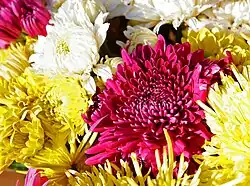
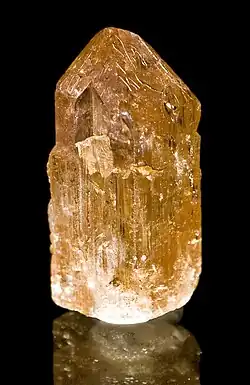
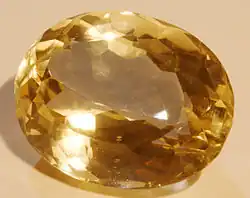
November's birthstone is the topaz (particularly, yellow) which symbolizes friendship and the citrine. Its birth flower is the chrysanthemum.[4]
Observances
This list does not necessarily imply either official status or general observance.
Non-Gregorian
(All Baha'i, Islamic, and Jewish observances begin at the sundown prior to the date listed, and end at sundown of the date in question unless otherwise noted.)
List of observances set by the Bahá'í calendar
List of observances set by the Chinese calendar
List of observances set by the Hebrew calendar
List of observances set by the Islamic calendar
List of observances set by the Solar Hijri calendar
Month-long
In Catholic tradition, November is the Month for prayer for the Holy Souls in Purgatory. A November List or November Dead List is sometimes maintained for this purpose.[5]
Guy Fawkes Night fireworks. Guy Fawkes Night is celebrated on November 5th in the United Kingdom.Guy Fawkes Night (United Kingdom, New Zealand and Newfoundland and Labrador, Canada), and its related observances:
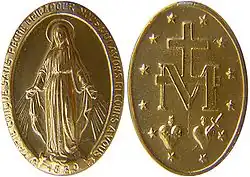
November 27The Miraculous Medal, whose design was created based on the apparitions of the Blessed Virgin Mary to Saint Catherine Labouré in Paris. In 1832, during an epidemic, the first medals were distributed, to which numerous healings and conversions were attributed, receiving the name of Miraculous Medal.
St Andrews Day (official national holiday in Scotland)
References
^"Mean Monthly Temperature Records Across the Globe". National Centers for Environmental Information (NCEI) of the National Oceanic and Atmospheric Administration (NOAA). Link is an example for one month; for other months, change the "202501" in the preceding URL to yyyymm, where yyyy is the four-digit year and mm is the two-digit month (01=January through 12=December)
^The Earth passes the junction of the signs at 20:39 UT/GMT November 21, 2020, and will pass it again at 02:33 UT/GMT November 22, 2021.


.jpg)